On 30 March, the Inaugural Assembly of the World Data Organization (WDO) was held in Beijing, with the election of its first council members, board of supervisors, and the organization leadership. This marks the official launch of the WDO. It is the world's first professional international organisation dedicated to advancing data development and governance practices, with its headquarters in Beijing. Tan Tieniu, Chairof Nanjing University CPC Council and Academician of the Chinese Academy of Sciences, was elected as the first Chairman of the Council of WDO.
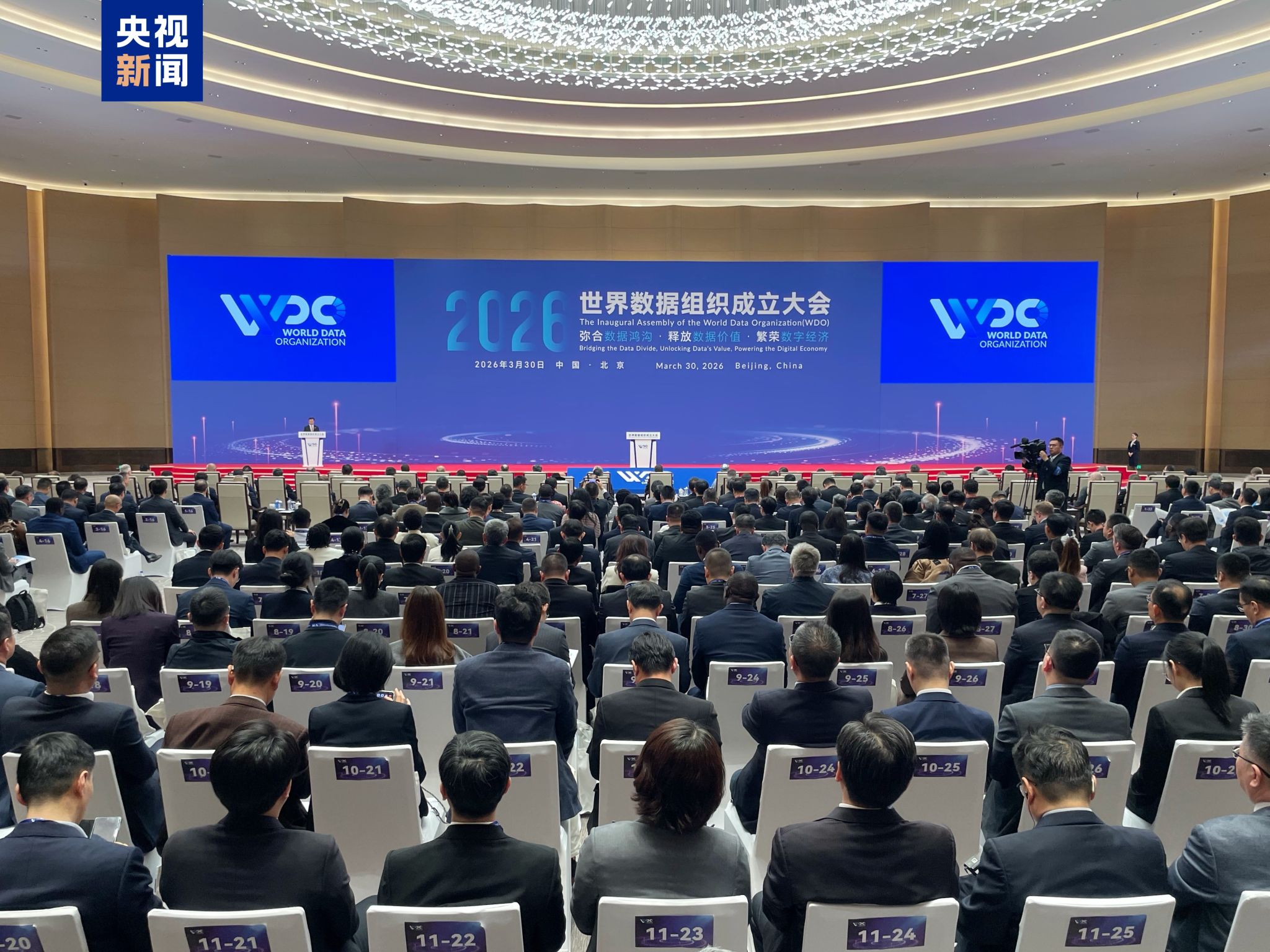
In an exclusive interview with a reporter from China Central Television (CCTV), Tan Tieniu stated that, at present, the global economic recovery remains sluggish and growth momentum is lacking; relying on traditional trade and investment to drive economic growth is, it must be said, yielding diminishing returns. Conversely, the digital economy is on the rise and can be described as flourishing. The artificial intelligence boom is in full swing, and the most significant characteristic of this wave is that it is data-driven. How to fully unleash the potential of data and drive the faster development of the digital economy is a common challenge facing all of humanity, and it requires a globally recognised international platform to help address these issues.
One of the key functions of the WDO is to "break down barriers": addressing the challenge posed by divergent data policies across nations, fostering industry consensus, standard recommendations and best practices, providing guidance to governments and research institutions, and helping multinational enterprises reduce data compliance costs. Furthermore, the WDO emphasizes "building ecosystems": applying data to practical scenarios such as healthcare, education and energy to drive project implementation and industrial innovation; strengthening talent development, particularly by helping countries in the Global South and developing nations to enhance their data capabilities and narrow the digital divide.
To date, the WDO has brought together over 200 members spanning more than 40 countries worldwide. Its membership comprises a diverse range of entities, including enterprises, universities and think tanks, international organisations and financial institutions, covering 14 sectors such as industry, finance, healthcare, public services, e-commerce and retail, transport and logistics, energy, construction, the internet, agriculture, education, media, the automotive sector and the legal profession. This has resulted in the initial formation of a globally distributed, multi-stakeholder membership ecosystem characterised by collaborative engagement.