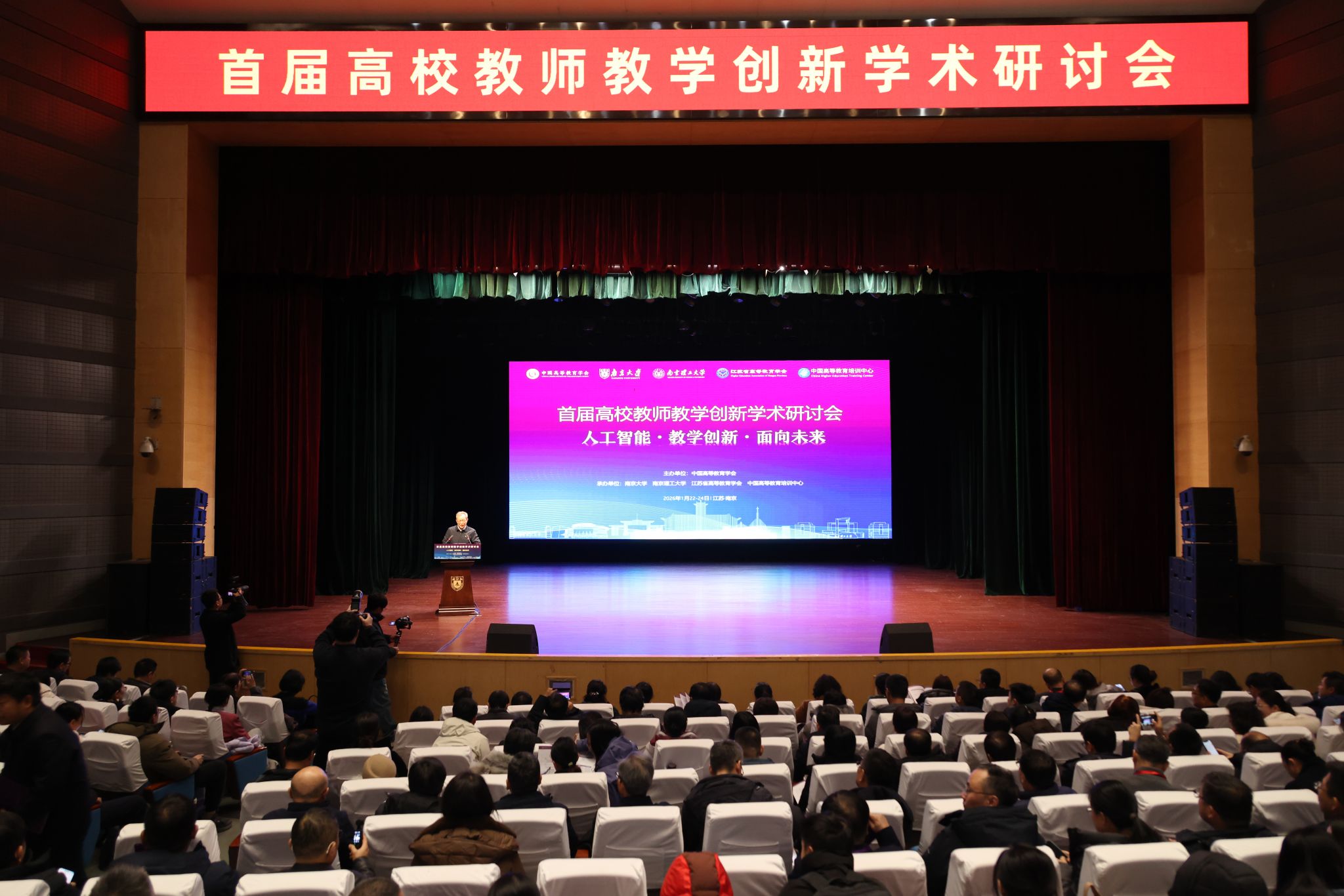
On January 23, the first Symposium on Teaching Innovation for University Teachers took place at Nanjing University. The symposium was jointly organized by the China Association of Higher Education, Nanjing University, Nanjing University of Science and Technology, Jiangsu Association of Higher Education, and the China Higher Education Training Center, with the theme "Artificial Intelligence · Teaching Innovation · Facing the Future." Attendees included Tan Zhemin, President of Nanjing University and Academician of the Chinese Academy of Sciences; Wu Shixing, Deputy Director of the Higher Education Department of the Ministry of Education; and Xu Weiqing, Director of the Education Quality Assessment Center of the Ministry of Education.
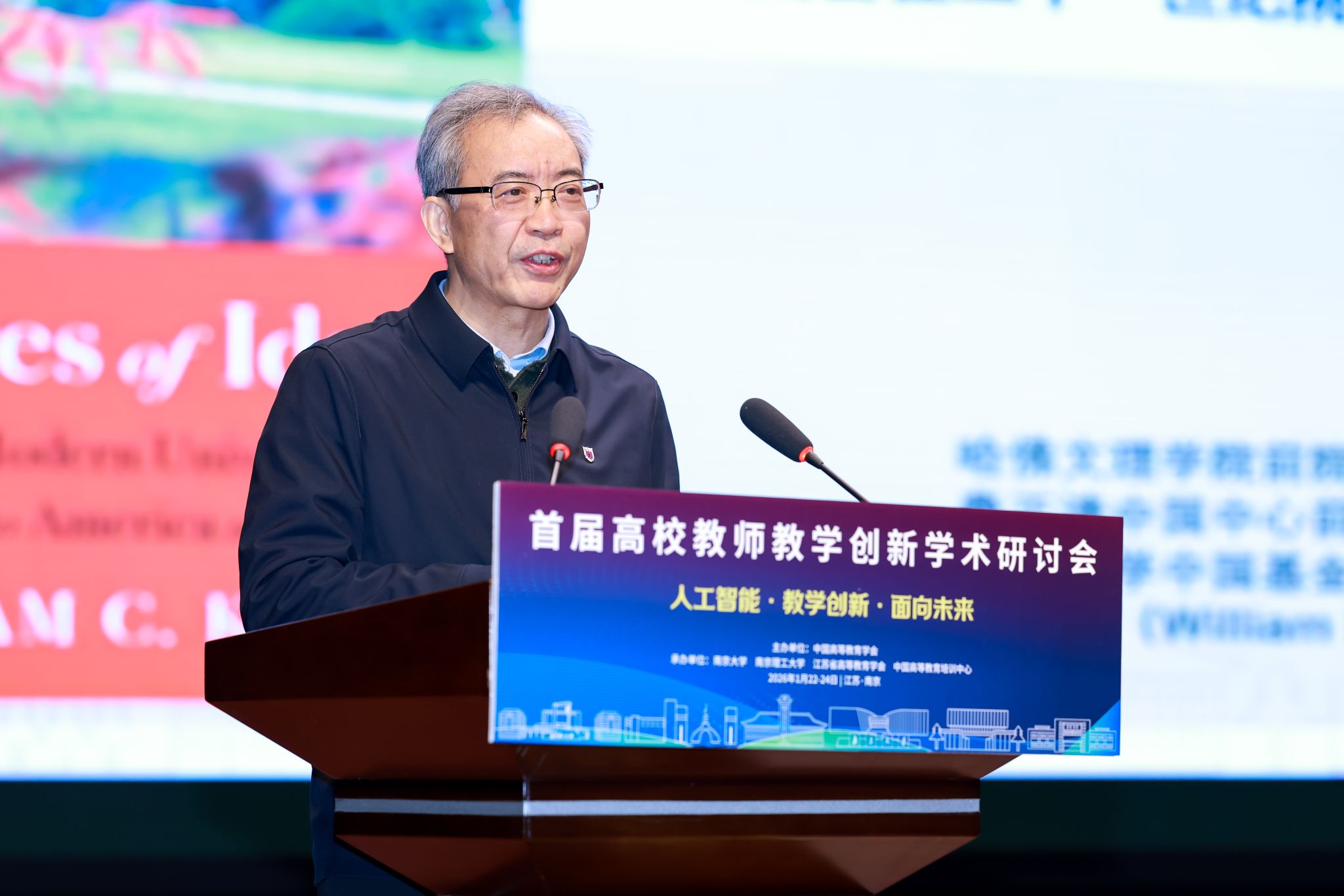
Tan Zhemin delivered a keynote report titled "How University Education Finds Its Place in the AI Era." He deeply analyzed the new issues and challenges that the development of artificial intelligence technology poses to higher education, as well as the exploration and practice of global universities in educational reform and innovation. He highlighted NJU's educational reform approach and experiences from the "Three-Three System" to the "New Three-Three System." Tan Zhemin pointed out that talent cultivation has always been a key issue in the two significant revolutions in the history of higher education and is one of the major challenges universities face today. Looking to the future, artificial intelligence will inevitably have a profound impact on educational concepts, paradigms, content, methods, and evaluations, but the essence of universities and the core goals of talent cultivation will not change. In the face of technological torrents, universities should create an ecosystem that can stimulate individual potential, promote human-machine collaboration, and uphold humanistic values, allowing teachers and students to engage in meaningful teaching innovation.
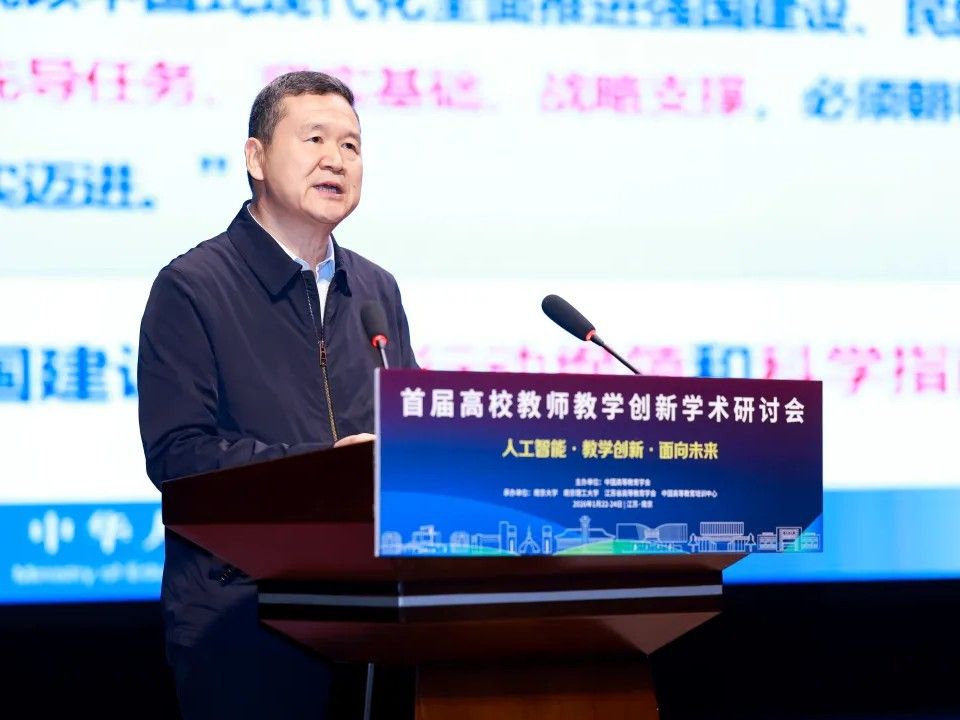
Wu Shixing's keynote report, titled "Vigorously Promote Teaching Innovation by Teachers and Comprehensively Improve the Quality of Independent Talent Cultivation", emphasized the need to deeply understand the new situation of higher education reform and development and fully recognize the critical role of teachers in accelerating the construction of an educational powerhouse. He stressed accurately grasping the key areas of enhancing teachers' teaching abilities, strengthening teachers' curriculum ideological and political teaching abilities and AI literacy, and effectively improving classroom teaching quality to motivate teachers to engage in talent cultivation model reform. He advocated for building and utilizing new channels and platforms for teachers' teaching development to significantly enhance teaching abilities and educational levels, contributing to the comprehensive construction of a strong and excellent higher education system and serving the modernization of China.
Xu Weiqing's keynote report, "Facing the AI Era: Viewing University Teaching Innovation from an Evaluation Perspective", noted that artificial intelligence is profoundly reshaping the educational ecosystem, driving systemic changes in educational paradigms. University teaching will experience new changes in personalized cultivation, cross-disciplinary cultivation, human-machine collaborative cultivation, and cross-campus, cross-regional, and cross-national sharing of educational resources. From an evaluation perspective, there are still shortcomings in university teaching plans, processes, outcomes, evaluations, and digital-intelligence transformation, which urgently need to be addressed. The future direction of teaching innovation should focus on updating cultivation concepts, placing greater emphasis on humanistic spirit cultivation, student learning planning design, and student mental and physical health.
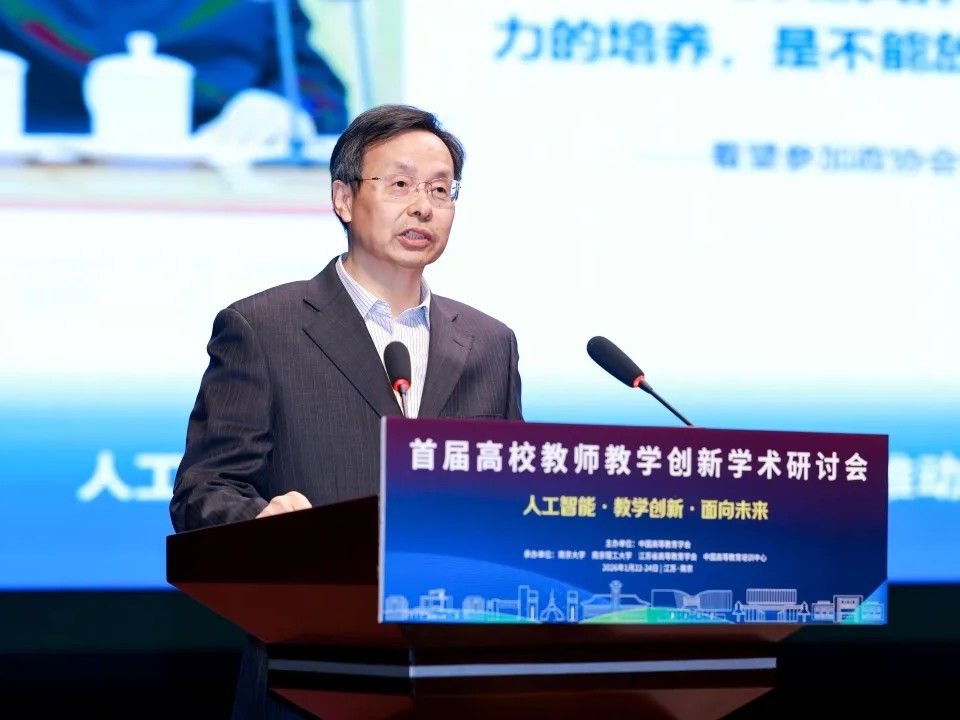
Li Nan, Vice President and Secretary-General of the China Association of Higher Education; and Zhang Lili, Second-Level Inspector of the Jiangsu Education Department, attended the opening ceremony and delivered speeches. Li Nan pointed out that in the first year of the "Fifteeth Five-Year Plan", this symposium aims to accurately grasp the direction of higher education development and the demand for economic and social talents, deepen educational and teaching academic research, promote talent cultivation innovation, and implement the fundamental task of moral education and character building. He offered three points on "how to cultivate people": first, return to the original intention of education and conduct teaching activities; second, focus on the shortcomings of cultivating top innovative talents and innovate teaching activities; third, deepen comprehensive reform in higher education to drive teaching innovation.
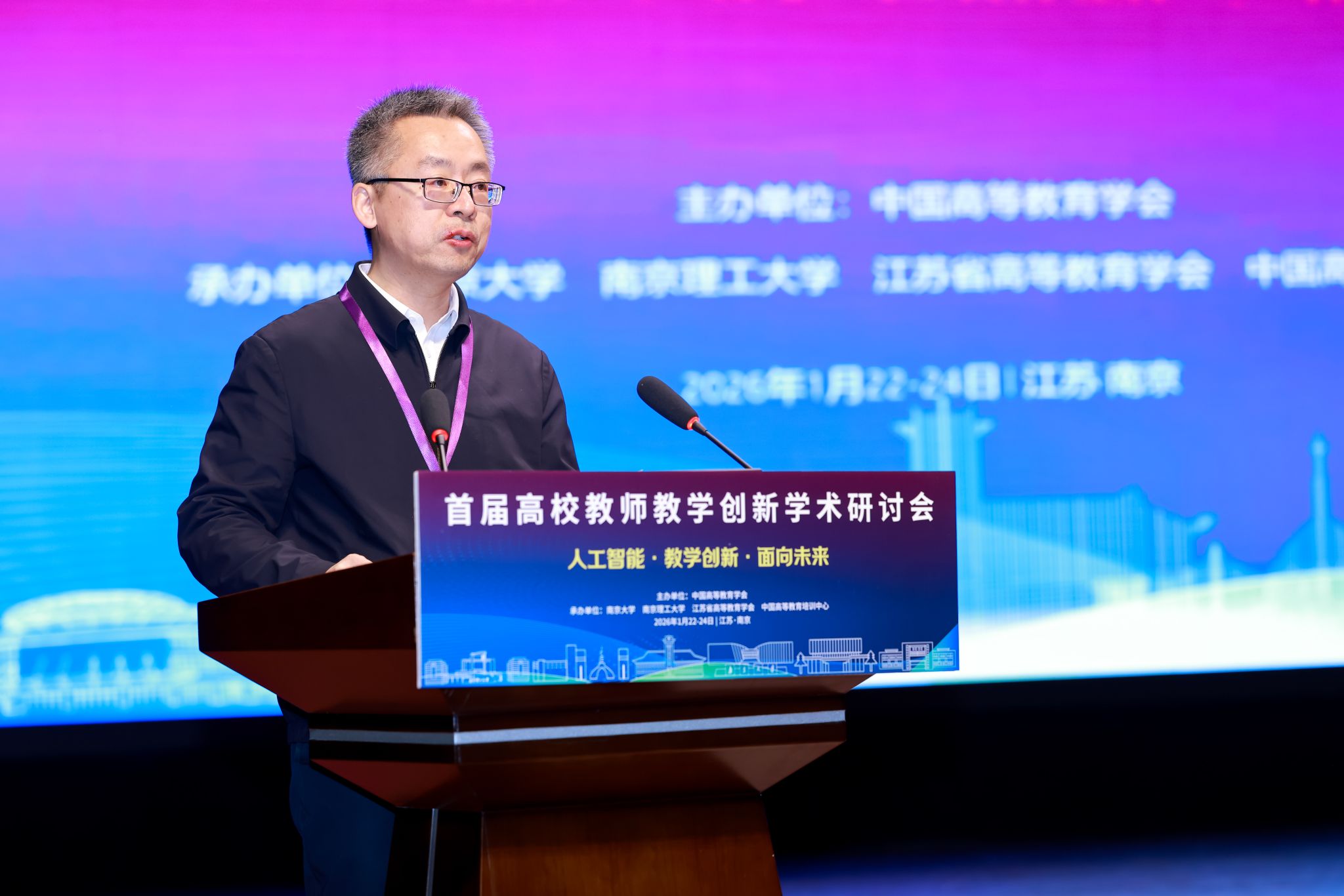
In his speech, Zhang Lili stated that teaching innovation is the source of vitality for educational development, the core path to answering the questions of the era, and the key engine for education's future direction. Jiangsu is committed to improving the quality of independent talent cultivation and continues to make efforts in promoting the construction of first-class undergraduate education. The scale of higher education continues to expand, the strength of disciplines and specialties continues to improve, and the development of teaching innovation by teachers presents a new landscape. The integration of education, technology, and talent reform continues to deepen. The Jiangsu Education Department will fully support the Sixth National University Teachers' Teaching Innovation Competition, striving to ensure that every aspect of the competition reflects "Jiangsu quality" and "Jiangsu warmth."
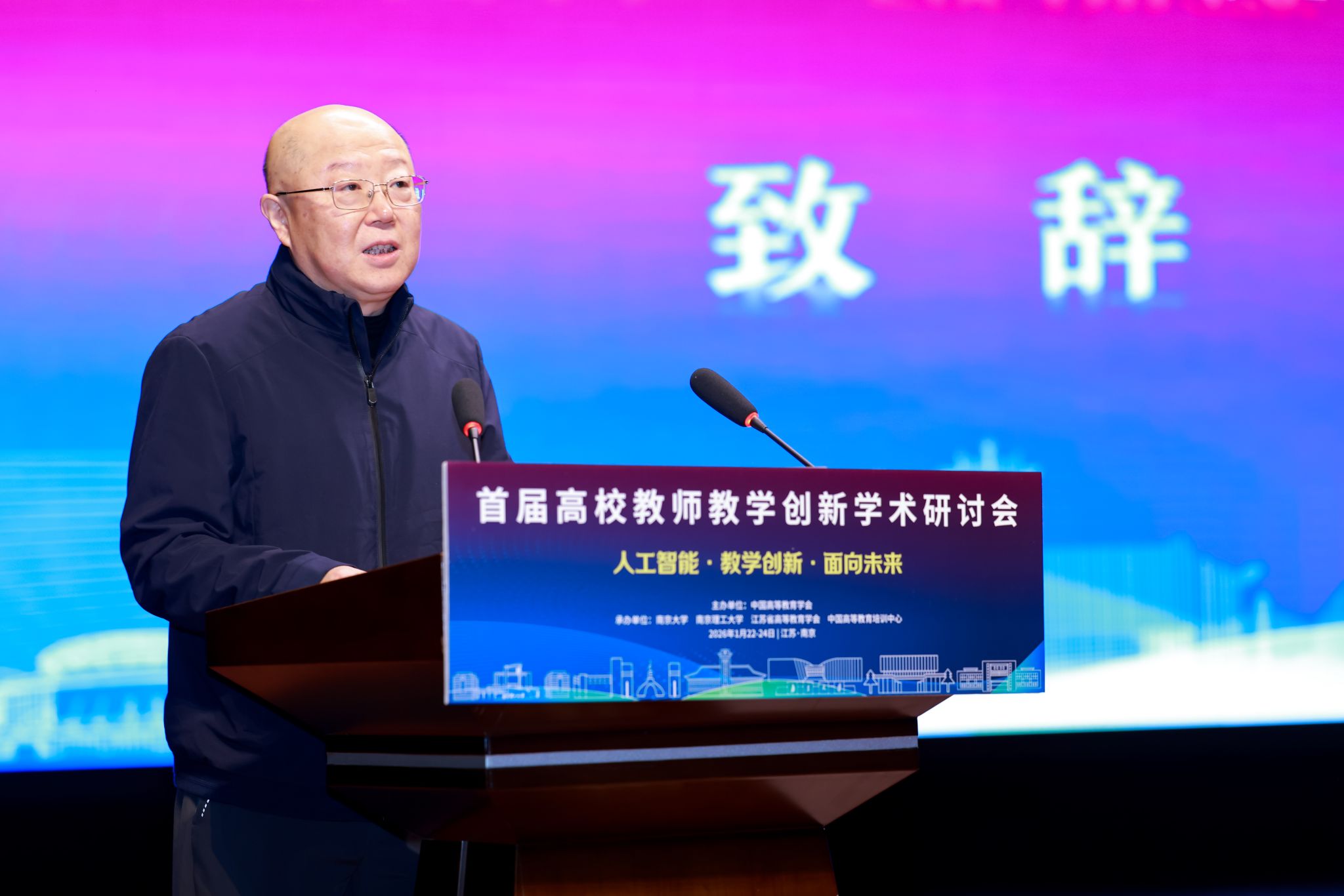
During the main forum, Yang Zongkai, former President of Wuhan University of Technology; Xia Qunke, Vice President of Zhejiang University; Li Bin, Vice President of Tianjin University; Xu Lei, former Vice President of Fudan University; and Li Qiang, Vice President of Nanjing University of Science and Technology, delivered keynote reports respectively. They engaged in in-depth discussions on the disruptive changes facing higher education in the AI era and shared practices and experiences from different universities in exploring new paths for cultivating top innovative talents.
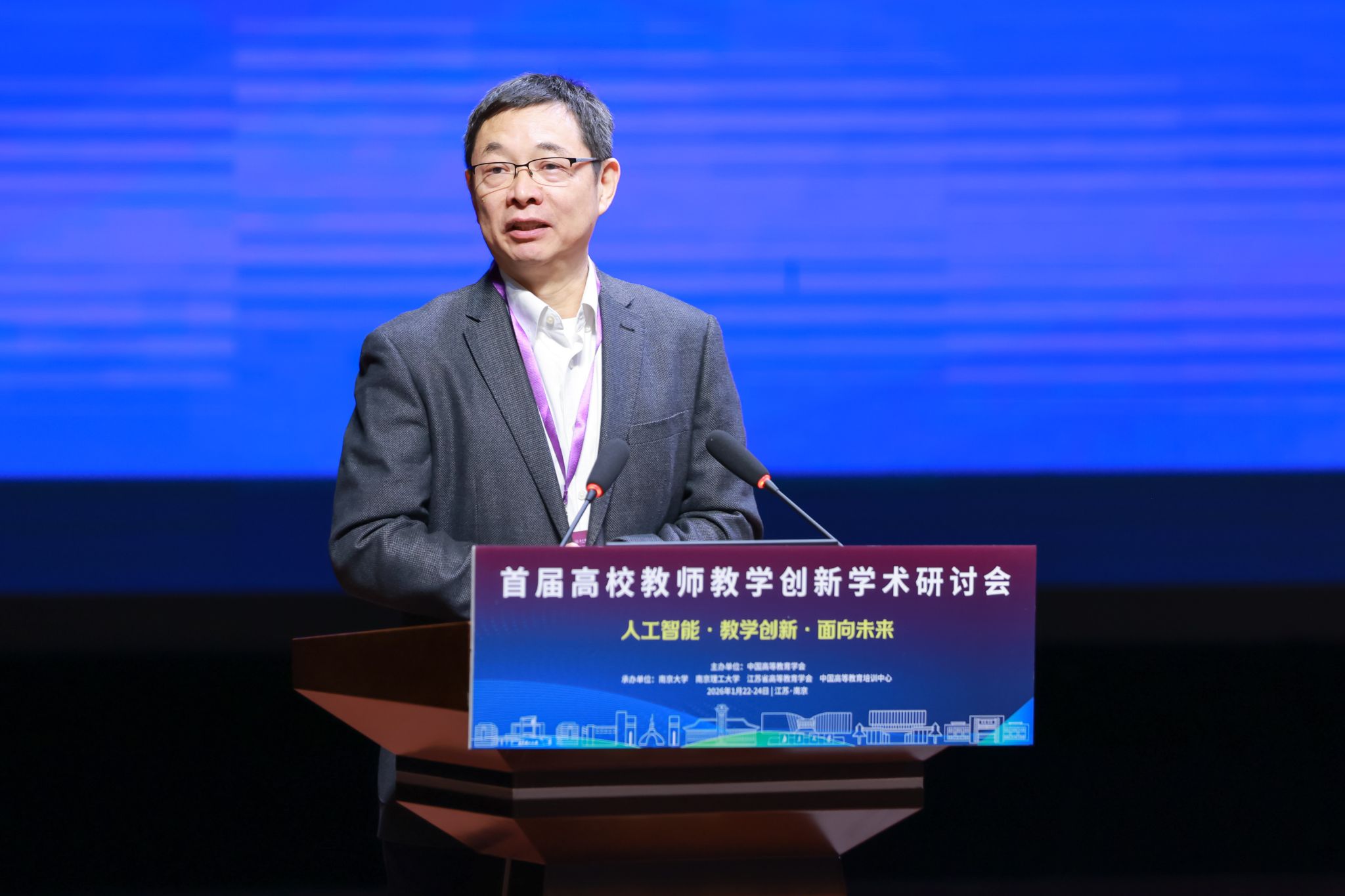
Yang Zongkai's report
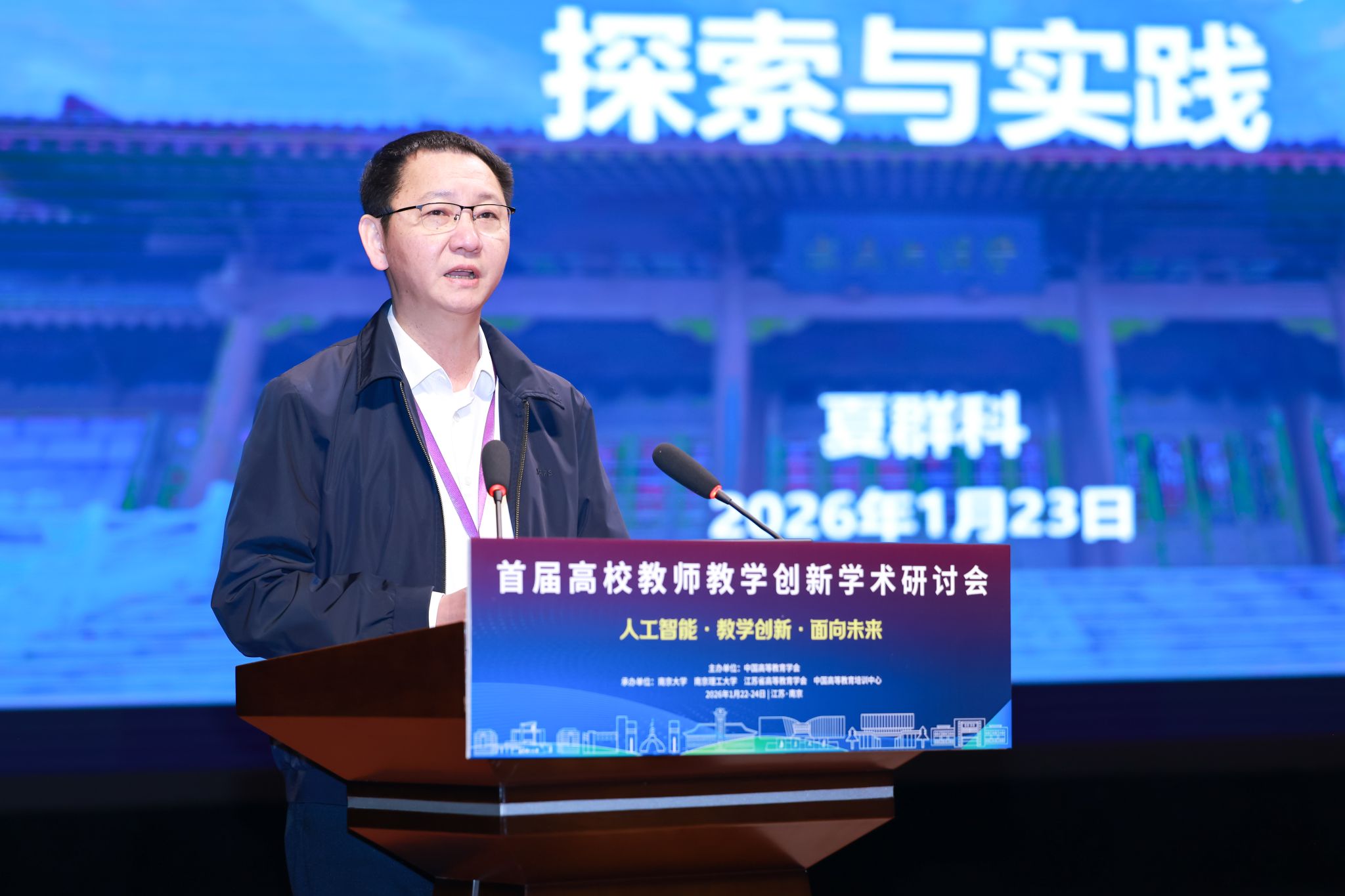
Xia Qunke's report
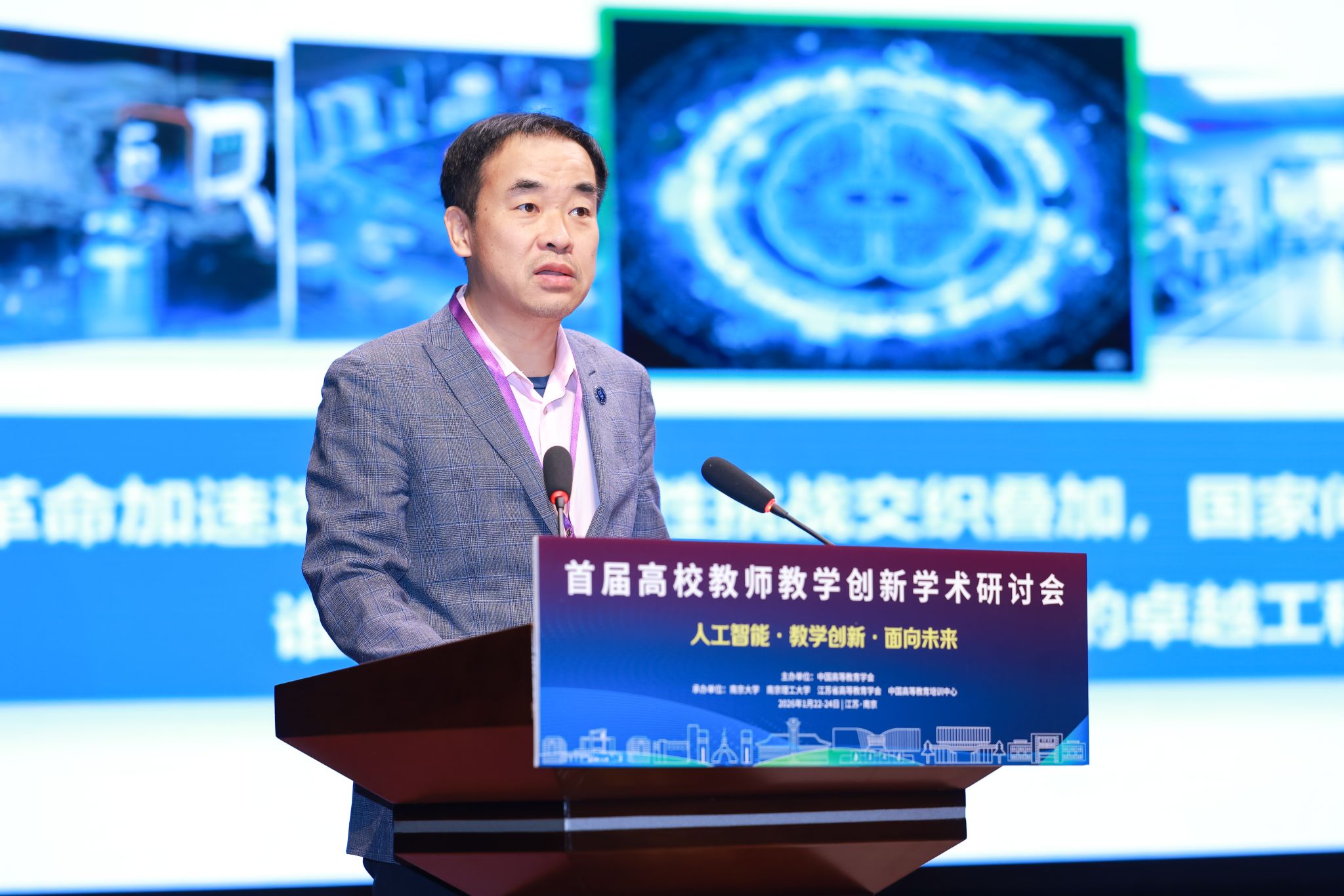
Li Bin's report
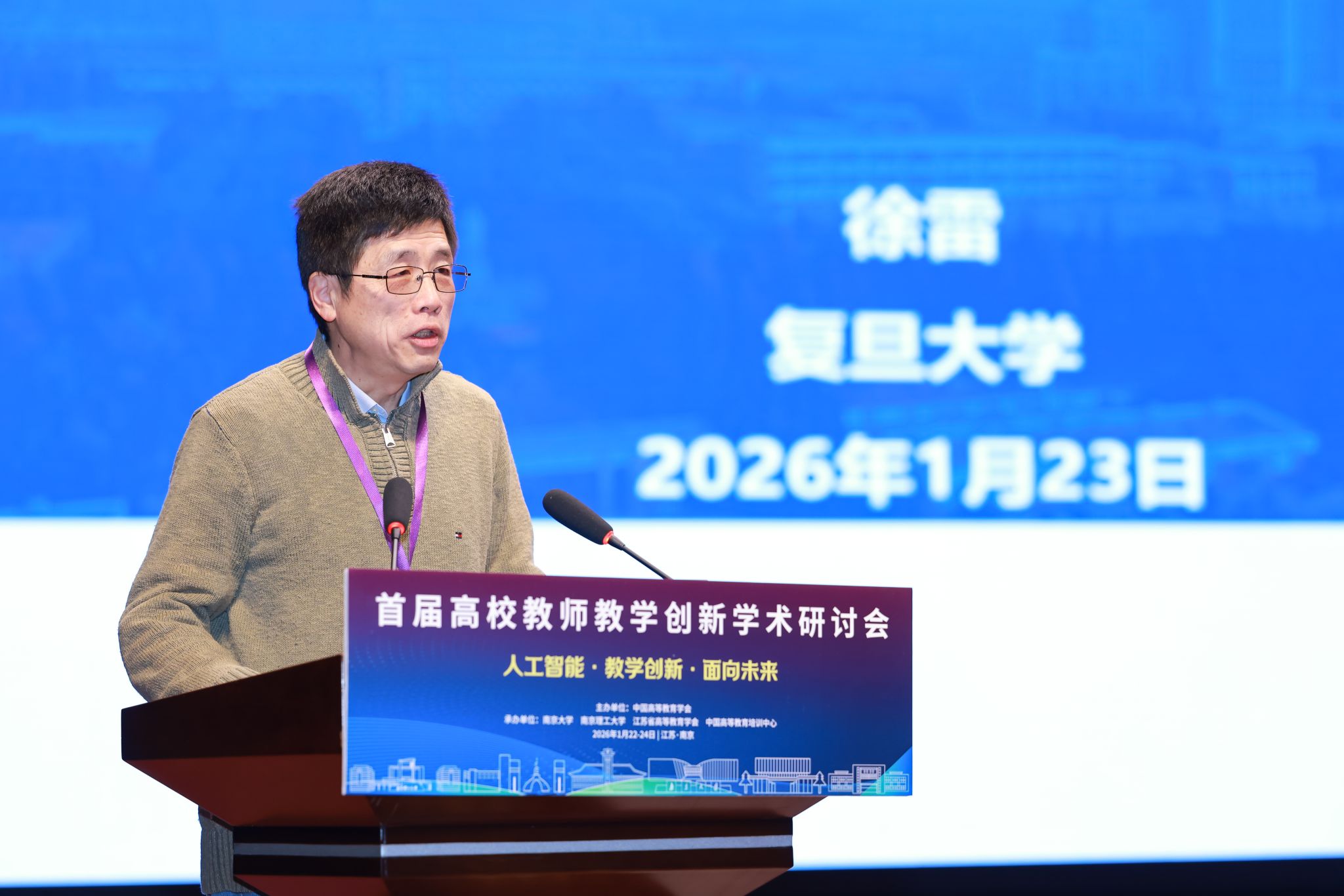
Xu Lei's report
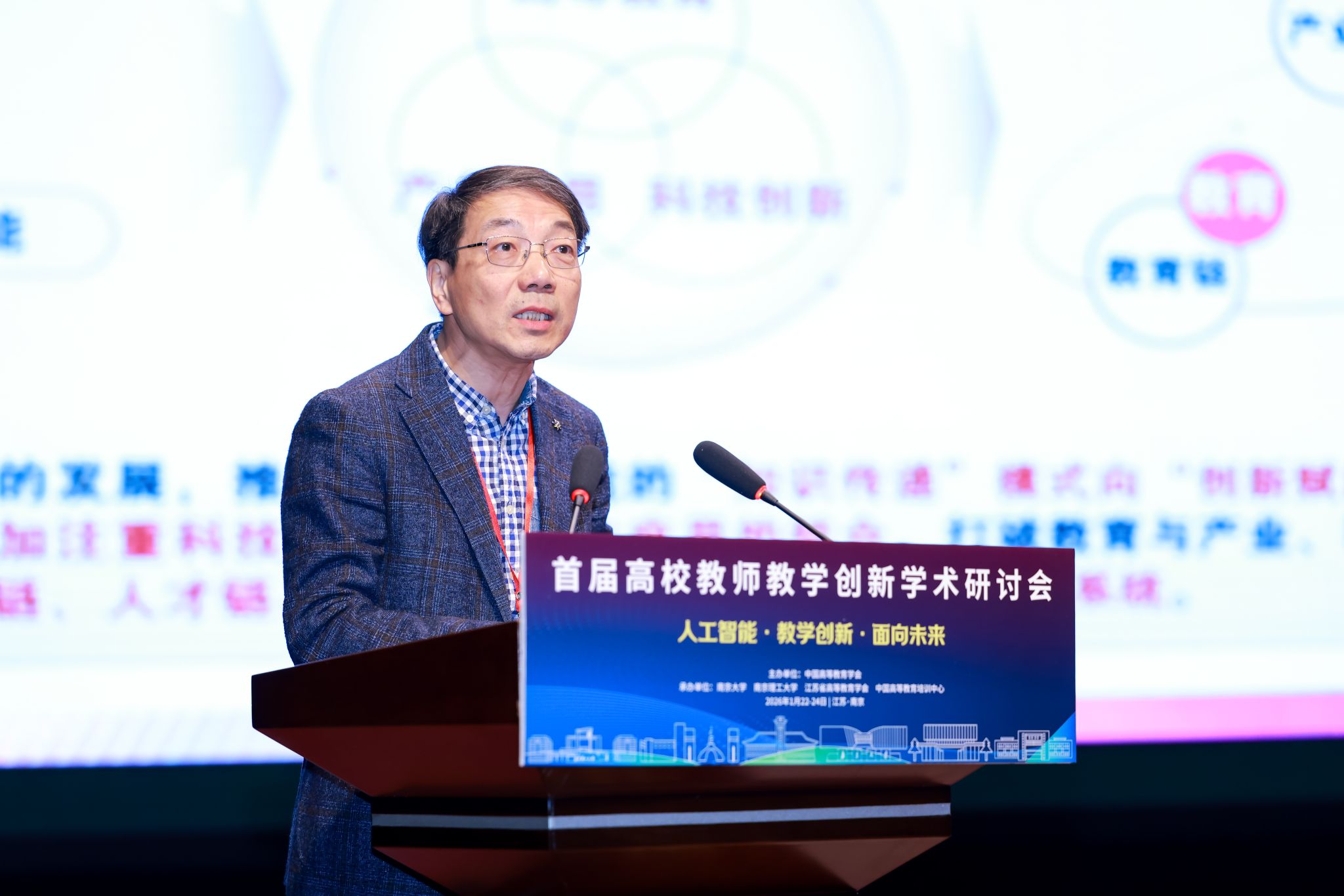
Li Qiang's report
At the meeting, Lu Guodong, Secretary-General of the Engineering Education Professional Committee of the China Association of Higher Education and Executive Vice Dean of the Robotics Institute at Zhejiang University, released and interpreted the "National Report on the Development of University Teachers' Teaching."
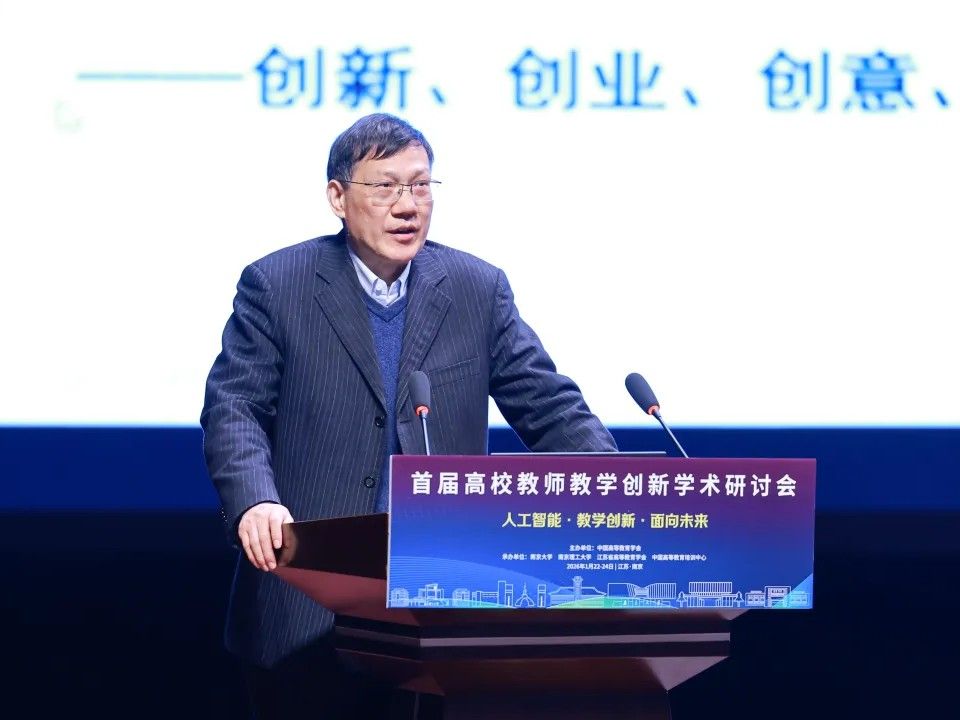
The meeting was chaired by Ding Xiaochang, President of the Jiangsu Association of Higher Education, and Lu Xiancai, Member of the Standing Committee of the CPC NJU Committee and Vice President of NJU.
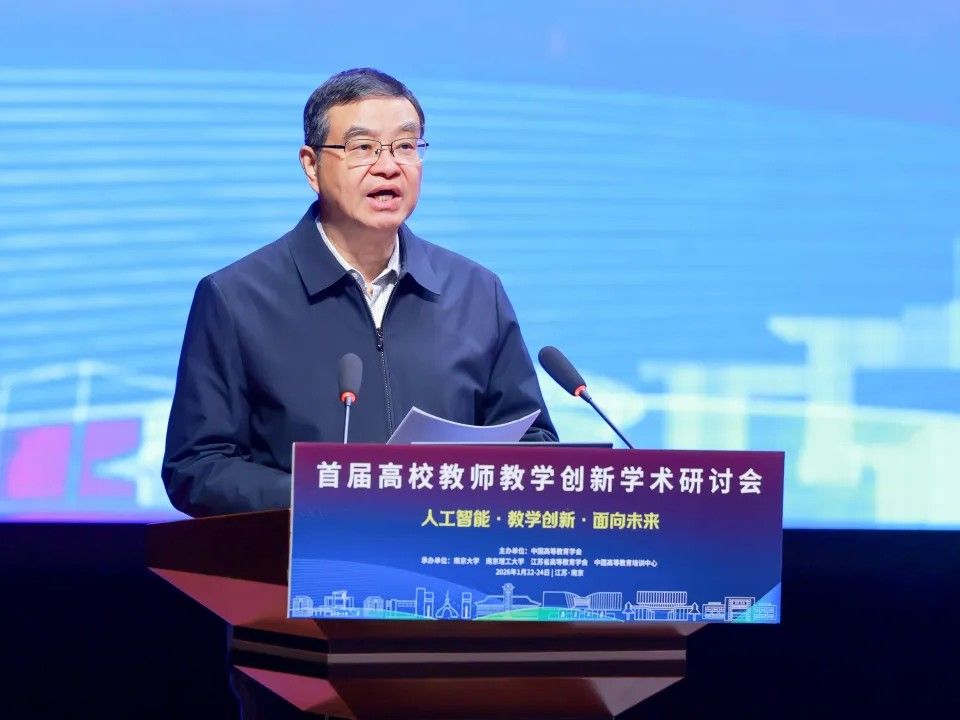
Ding Xiaochang
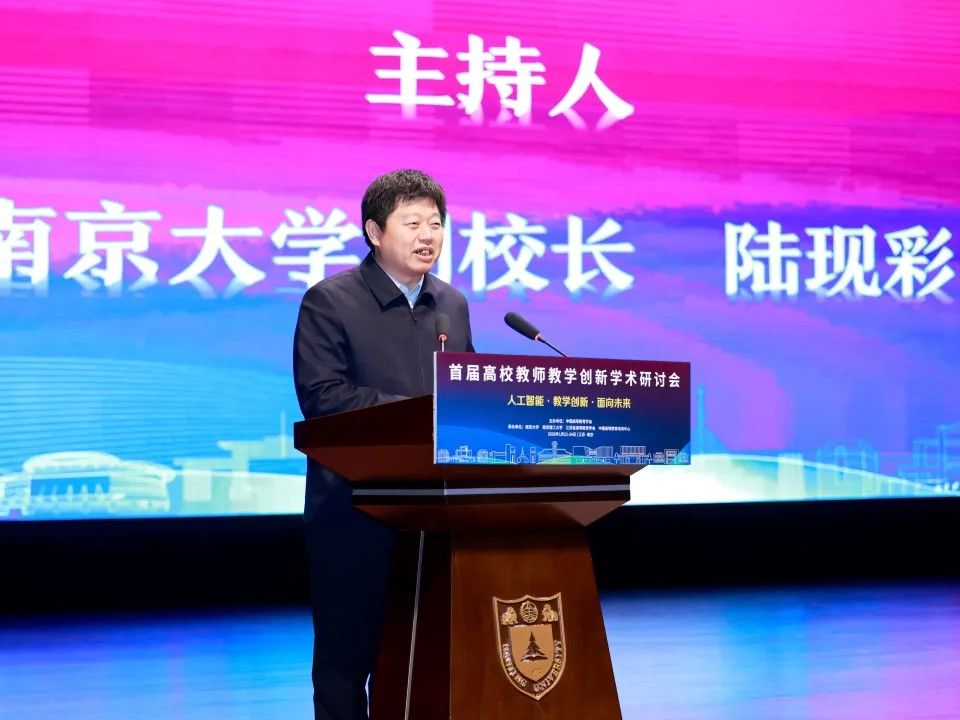
Lu Xiancai
The symposium featured one main forum, five sub-forums, and two panel discussions, with over a thousand participants from various education administrative departments, provincial higher education societies, university leaders, higher education management department heads, experts and scholars in the field of higher education research, teacher representatives, and business representatives.
A series of excellent reports showcased the higher education sector's focus on the new situations, tasks, and requirements of the "Fifteenth Five-Year Plan" period, actively implementing the spirit of the National Education Work Conference, proactively responding to the new challenges posed by artificial intelligence and future higher education development, focusing on how to cultivate people, deepening educational and teaching academic research, promoting talent cultivation innovation, and supporting the construction of an educational powerhouse through high-quality development in higher education.