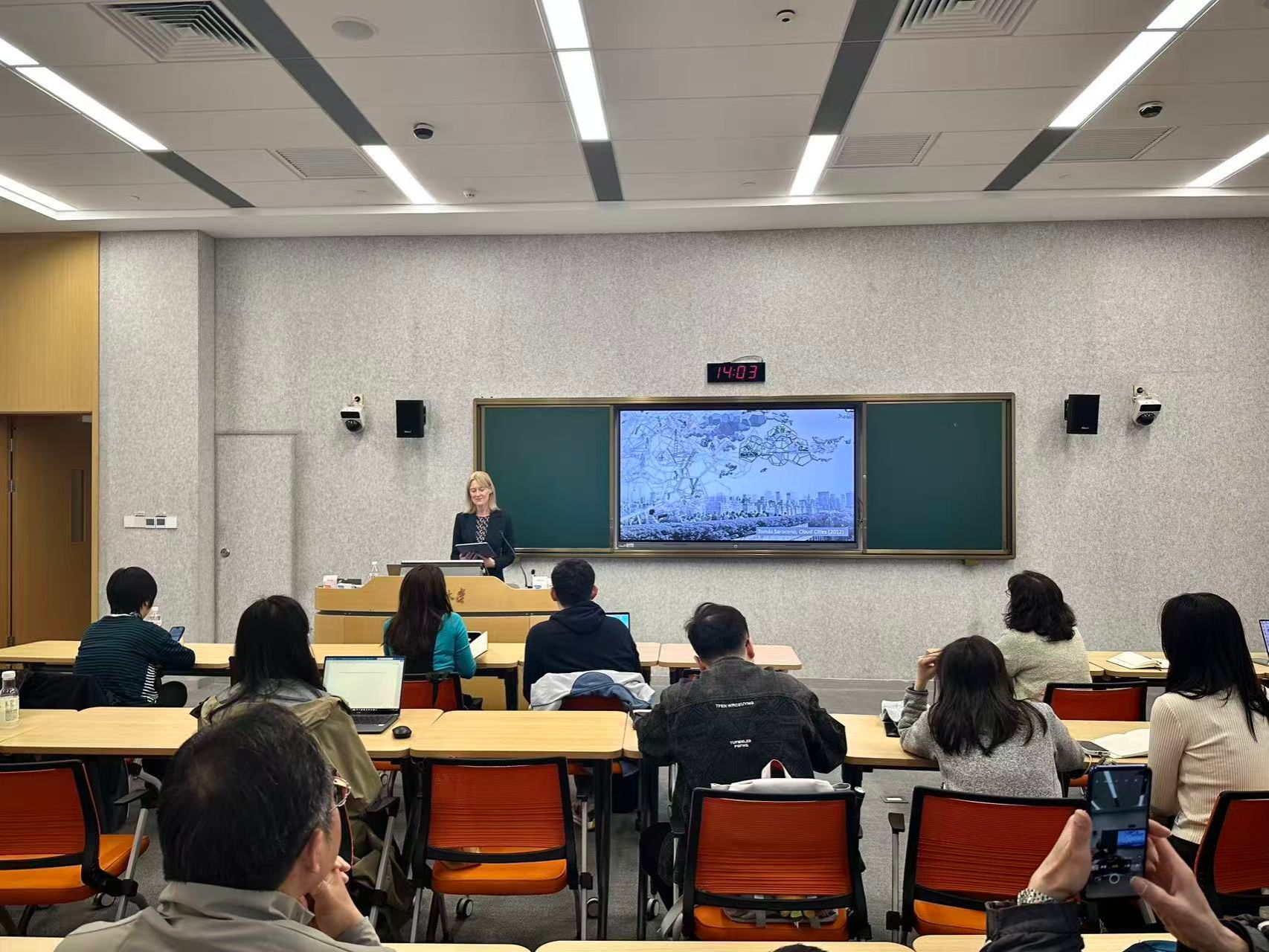
On the afternoon of April 2, 2026, the 16th Global Humanities Lecture was held at Nanjing University Suzhou Campus. Professor Joanna Page, Professor of Latin American Studies at the University of Cambridge and Director of the Centre of Arts, Social Sciences and Humanities (CRASSH), delivered a keynote lecture titled "Speculative Ecologies: Reading Latin American Art through Science Fiction." The event attracted faculty and students from the Institute of Global Humanities at Nanjing University as well as other departments across the university. The lecture was hosted by Professor Du Lanlan of the Institute of Global Humanities.
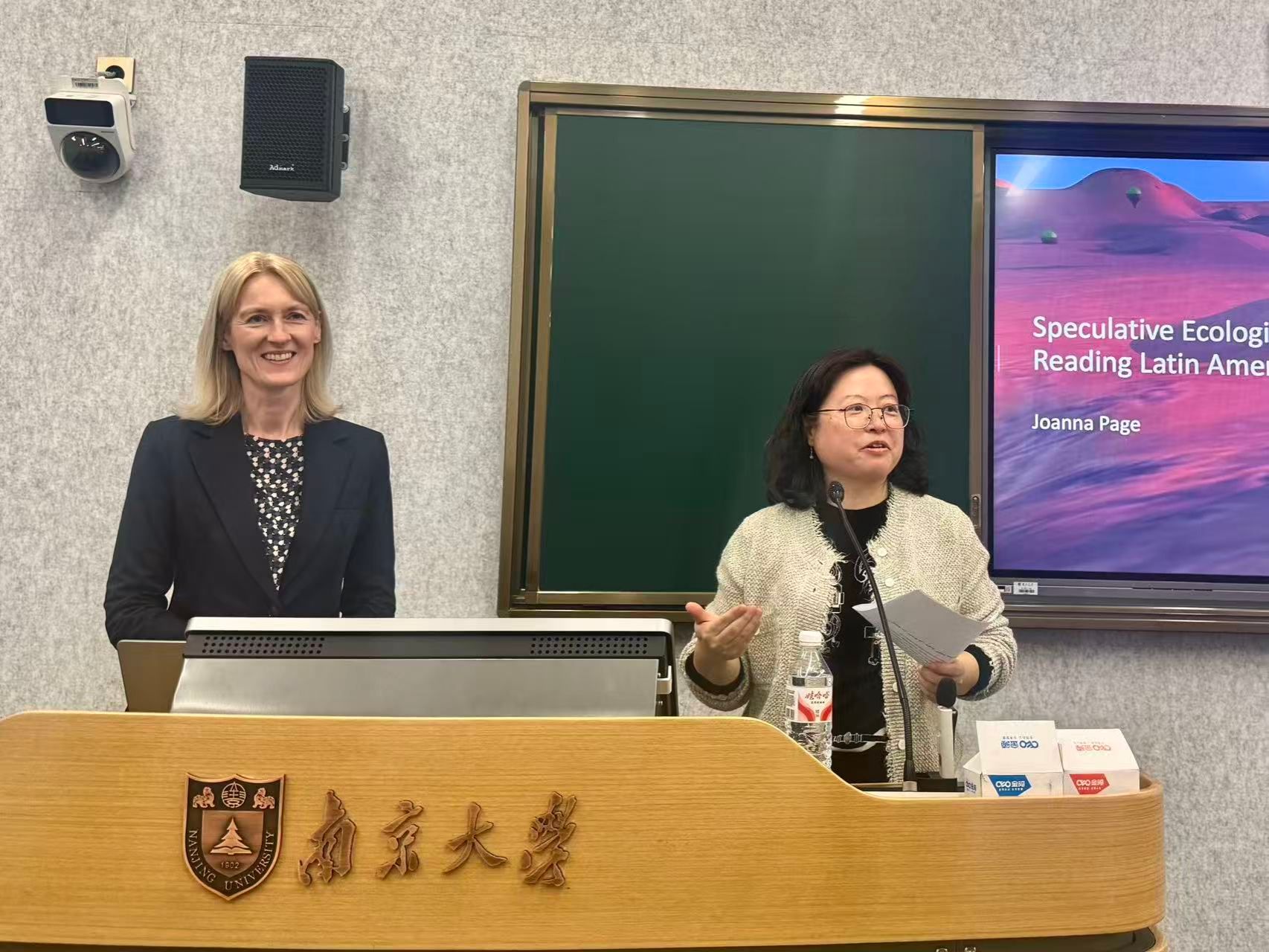
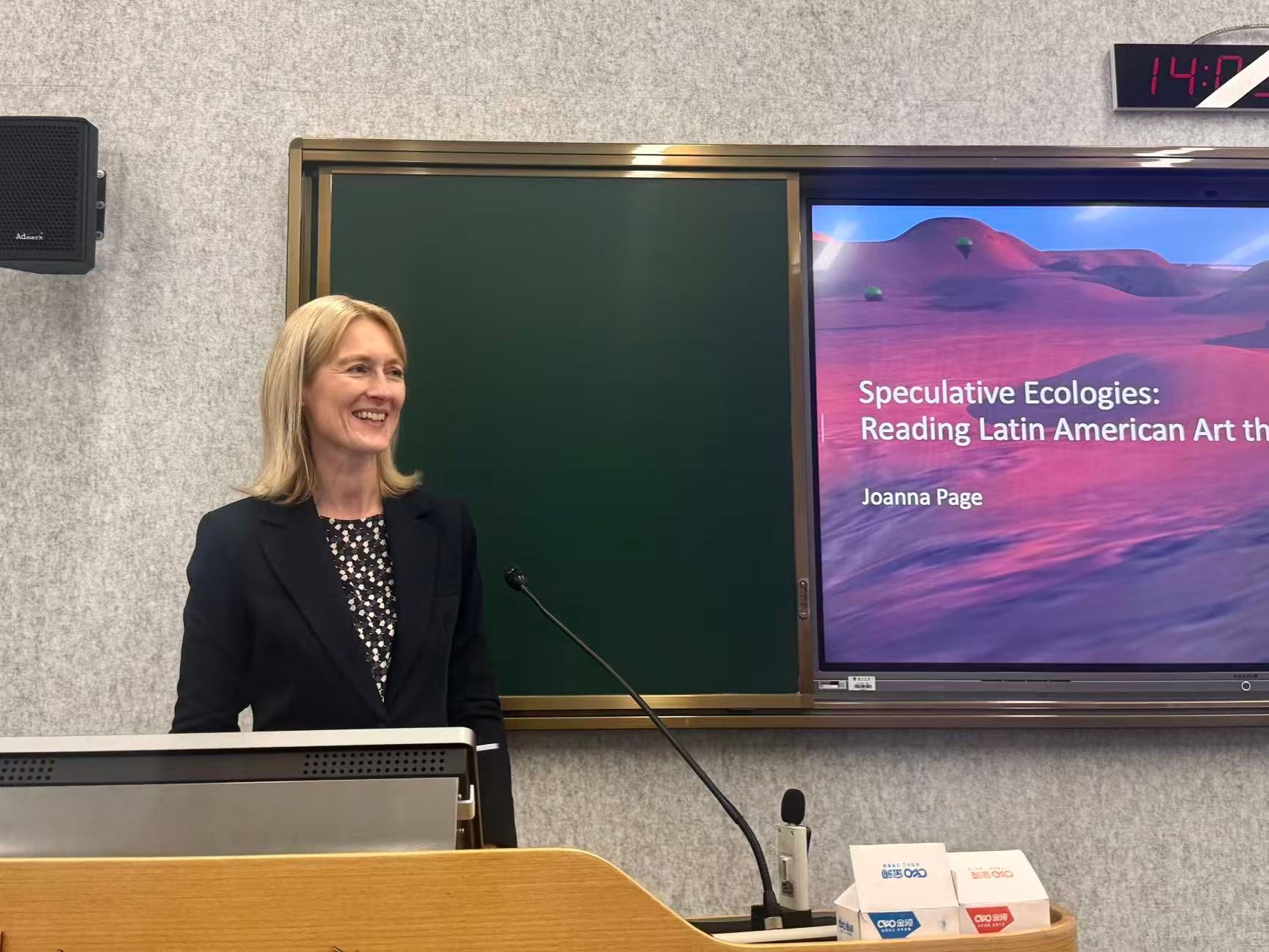
Science fiction is most commonly studied in literature and film, but what happens when its narrative and epistemological strategies are adopted by visual artists? Addressing this question, Professor Page guided the audience into cutting-edge discussions at the intersection of contemporary Latin American art and science fiction studies.
In the lecture, Professor Page noted that contemporary Latin American artists widely employ a range of science fiction strategies, including cognitive estrangement, speculative biology, posthumanism, world-building, and interspecies encounters. In their creative practices, these artists appropriate and transform methods typically associated with scientific knowledge production, such as classification systems, specimen-making, model construction, and prototype experiments. Through such practices, they demonstrate that art is no longer merely an illustration of scientific knowledge, but has become a vital force capable of intervening in knowledge production, reshaping modes of perception, and reimagining future worlds.
In the case study section, Professor Page highlighted the work of Tomás Saraceno and other contemporary Latin American artists and collectives. By examining their diverse media and artistic approaches, she illustrated how speculative aesthetics are employed to reconfigure the relationships among humans, technology, and non-human life. She emphasized that interpreting contemporary Latin American art through the lens of science fiction reveals how speculative aesthetics can function as a decolonial environmental perspective. Through speculative artistic languages, Latin American artists continuously challenge anthropocentric frameworks of knowledge and, amid the intertwined contexts of climate crisis and technological transformation, open up new perceptual structures and ethical horizons.
Following the lecture, an active Q&A session fostered lively exchanges between Professor Page and the audience. The event not only deepened participants’ understanding of the intersection between Latin American art and science fiction studies, but also provided fresh inspiration for advancing research on literature, art, and environmental thought from a global humanities perspective.
Writer: Feng Yufei
Editor: Guo Junlin