On January 31, 2026, the launch meeting and scientific symposium for the Sun-Earth L5 Solar Exploration Project (Xihe-2) were held at Nanjing University. The event was attended by Tan Zheming, President of NJU and Academician of the Chinese Academy of Sciences (CAS), and Zhang Chunming, Deputy Director of the Shanghai Academy of Spaceflight Technology, who both delivered speeches. Other attendees included Fang Cheng, Academician of the CAS and Professor at the School of Astronomy & Space Science at NJU; Peng Wei, Deputy Director of the First System Engineering Department of China National Space Administration (CNSA), along with leaders from project management departments, academicians and experts in the field, and representatives from major research units. The meeting was presided over by Zheng Hairong, Member of the Standing Committee of the CPC NJU Committee, Executive Vice President of NJU, and Academician of the CAS.
Tan Zheming and Zhang Chunming emphasized that Xihe-2 is an important step forward based on Xihe-1. It is a pioneering project driven by scientific goals and supported by engineering technology, with international foresight. Nanjing University and the Shanghai Academy of Spaceflight Technology will closely collaborate with all research units to ensure the smooth implementation of the Xihe-2 project.
In his speech, Peng Wei set clear requirements for the development of the engineering system, achievement of scientific goals, and the conduct of international cooperation.
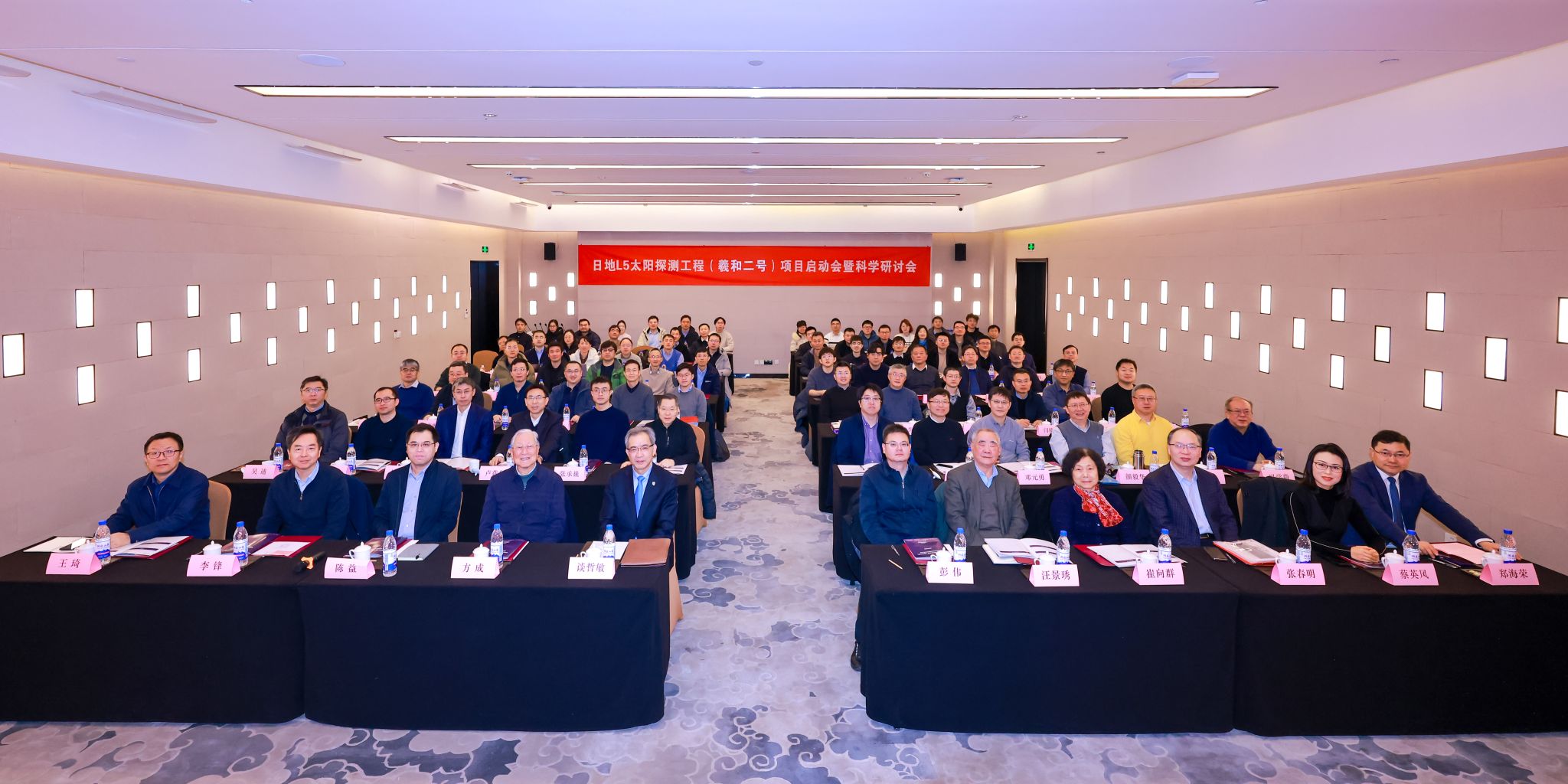
Launch Meeting
In October 2021, China's first solar exploration satellite, Xihe-1, was successfully launched, achieving significant scientific discoveries. Building on this, Xihe-2 aims for greater development, with plans for launch between 2028 and 2029. It will be the first artificial probe deployed at the Sun-Earth L5 point internationally, aiming to explore unknown regions of the solar system, conduct stable solar observations, and investigate the interplanetary space environment. Xihe-2 is expected to achieve world-class scientific results in the mechanisms of solar eruptions and bring revolutionary advances in space weather warnings and forecasts.
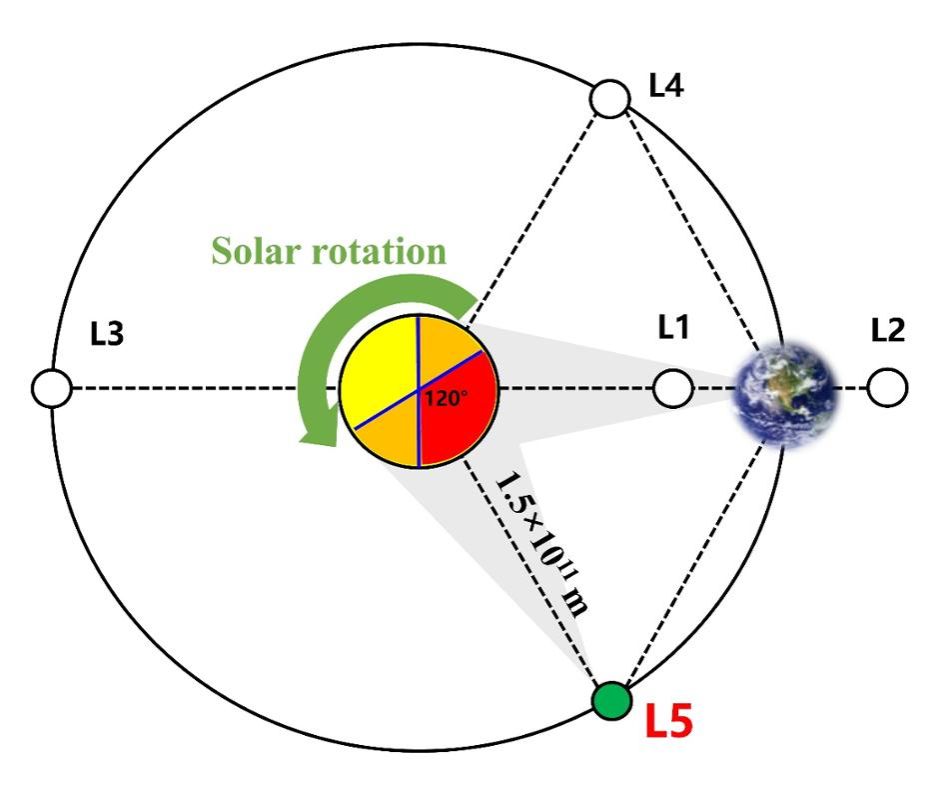
Sun-Earth L5 Point schematic diagram
At the meeting, Professor Li Chuan from NJU introduced the project background, core scientific issues, and expected scientific outcomes of Xihe-2. Researcher You Wei from the Shanghai Academy of Spaceflight Technology presented the overall design plan and key technical routes. Scientists and chief designers engaged in in-depth discussions on the scientific significance, key scientific issues, observation scheme design, payload technical routes, and data application and sharing, providing valuable insights.
In his concluding remarks, Academician Fang Cheng expressed hope for close cooperation between the scientific team and the satellite system and payload teams to ensure successful payload development and data calibration. He also emphasized the importance of integrating solar polar orbit exploration, Sun-Earth L1 point exploration, near-Earth satellites, and ground-based telescopes to establish a comprehensive solar stereoscopic observation system, aiming to achieve a series of original results with international impact.
The meeting marked the official transition of Xihe-2 into the full implementation stage, clarifying goals and building broad consensus for subsequent project development and scientific research. Participating research units expressed their commitment to enhance collaboration and coordination under the overall project arrangement, advancing the project with high quality and striving to make Xihe-2 a landmark project with significant international impact in China's space science field.