On April 30, Nanjing University held a Teaching Committee meeting at the Xianlin campus to hold a special discussion on "University Education Reform in the AI Era." Lu Xiancai, Member of CPC NJU Committee, Vice President of NJU, and Chair of the Teaching Committee, attended the meeting and delivered a speech.
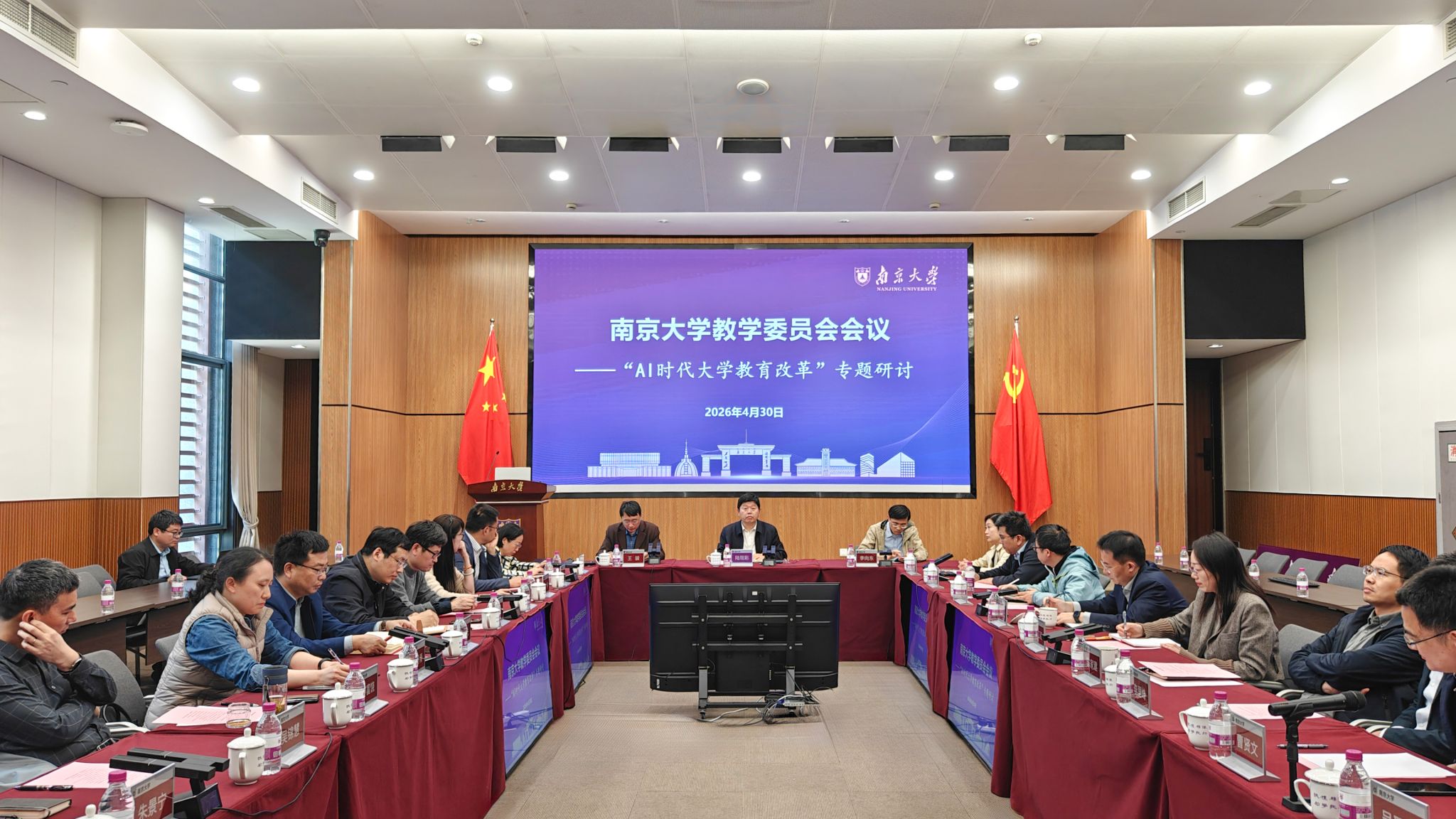
Lu Xiancai attentively listened to the remarks of the committee members and spoke on the occasion. He pointed out that against the backdrop of current changes in the era, shifts in social demands, and new requirements for talent cultivation proposed by the state, the reform of undergraduate education at the university faces new topics and challenges that require deeper research, reflection, and discussion. He emphasized that each college should conduct in-depth surveys targeting students and teachers to accurately grasp the real ecology and actual needs of teaching and learning; they should effectively strengthen organized teaching construction, actively promote the normalization and institutionalization of teacher training and exchange discussions, and stimulate the intrinsic motivation of a wide range of teachers to engage in teaching reform. At the same time, the Teaching Committee should fully leverage its role as a "think tank," broadly gathering the wisdom and strength of the entire university to explore and form a talent cultivation reform path with NJU characteristics, contributing to the high-quality development of the university's undergraduate education.
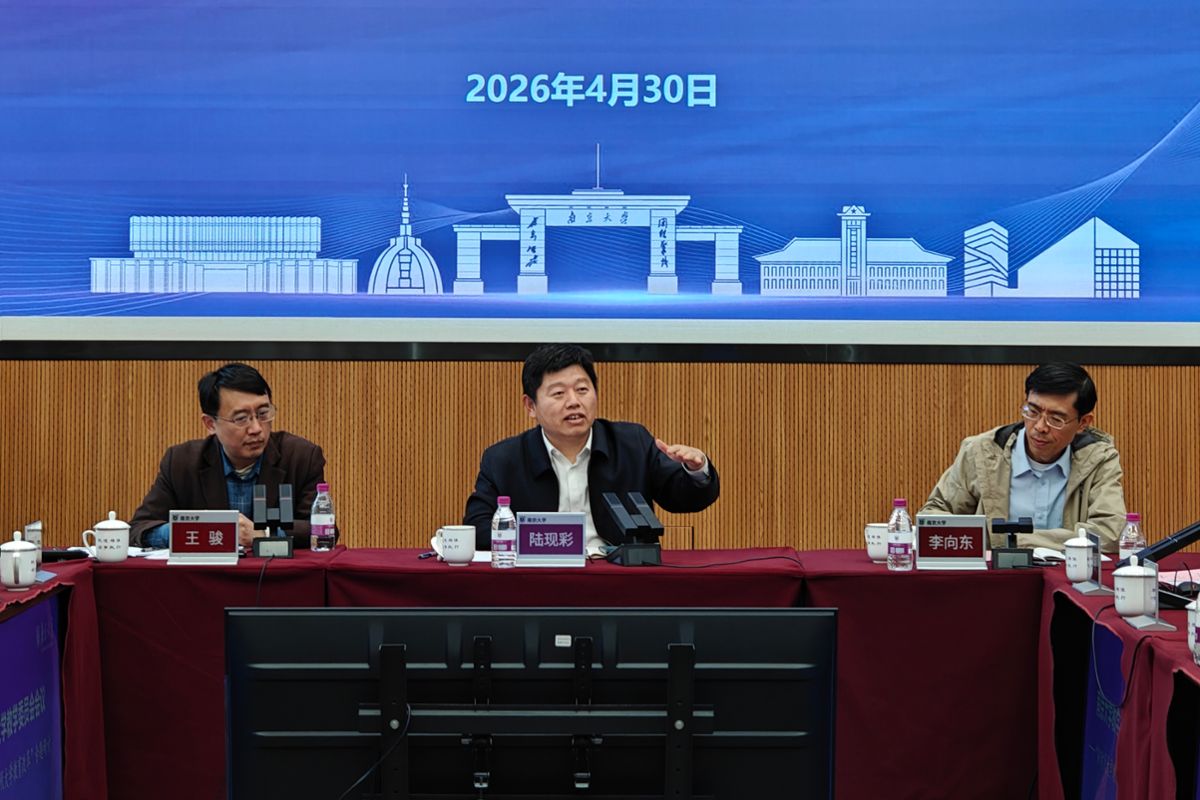
Wang Jun, Dean of the Undergraduate School and Secretary-General of the Teaching Committee, presided over the meeting and reported on the overall ideas and key tasks for undergraduate education reform this year.
During the meeting, committee members engaged in in-depth discussions on topics related to the recent report by President Tan Zhemin titled "Several Thoughts on University Education Reform in the AI Era." Discussions centered on the collaborative iterative upgrade of the classroom teaching model involving "teacher-student-machine," the cultivation of students' foundational abilities and innovative thinking, interdisciplinary education and the expansion of students’ knowledge structures, the integration of technology and humanities education systems, new mechanisms for cultivating top innovative talents, and new models for training talents urgently needed by national strategies. Committee members exchanged fully and engaged in deep discussions on the current hot and difficult issues in educational reform within various colleges.
Li Xiangdong, Nationally Recognized Master Teacher, Dean of the School of Astronomy and Space Science, and Vice Chair of the Teaching Committee, shared insights on exploring new mechanisms for cultivating top innovative talents. He discussed the school's innovative talent cultivation model that integrates science and education, deeply tied to major national scientific tasks, promoting talent cultivation through organized research; exploring a multi-faceted evaluation mechanism for students throughout their learning process, breaking away from a sole focus on credit performance, and incorporating innovation capabilities into comprehensive assessments.
Representatives from different schools and department shared their opinions and engaged in in-depth discussion. Members of the Teaching Committee and representatives from the Undergraduate School attended the meeting.