On September 24, Tan Tieniu, Chair of Nanjing University CPC Council and Academician of the Chinese Academy of Sciences delivered a live broadcast of the first lecture of the AI general education core course titled "Basic Concepts and Development Trends of Artificial Intelligence" to approximately 4,000 undergraduate freshmen and 5,800 graduate freshmen across the university.
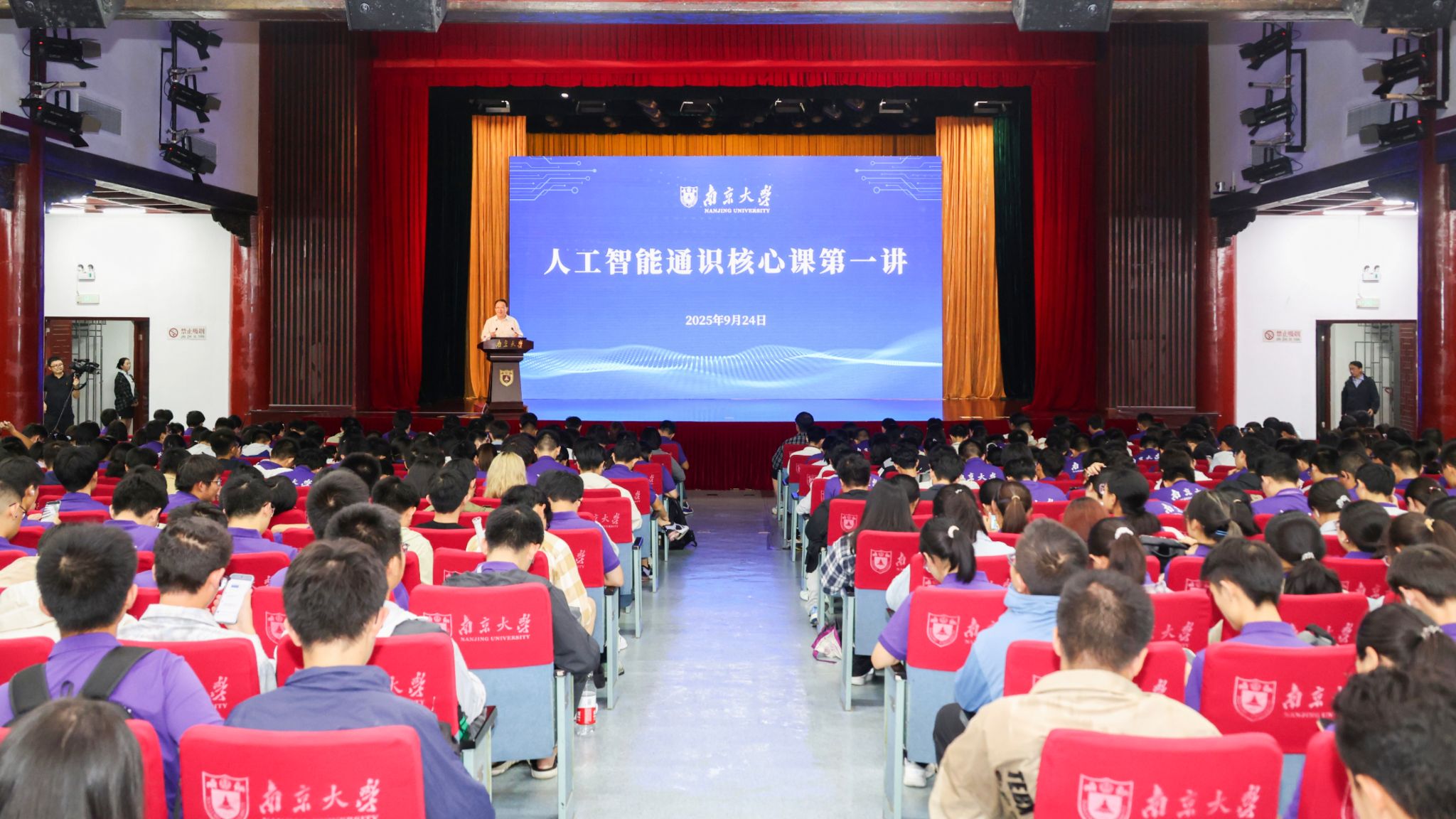
"Why do we offer this course? Because we are cultivating a generation of young people who have the competitiveness to lead the times and trends. I hope that when everyone leaves NJU, they will all possess the innovative capacity to achieve personal dreams and serve the nation and society." Tan Tieniu pointed out that establishing the "1+X+Y" AI general education core curriculum is an inevitable requirement for keeping pace with the times and cultivating people of the new era, an inevitable requirement for accelerating the construction of a strong educational nation, and also an inevitable requirement for responding to the transformation of scientific research paradigms. In the era of intelligence, cultivating young students with computational thinking, scientific awareness, and intelligent concepts is the proper duty of today's university education.
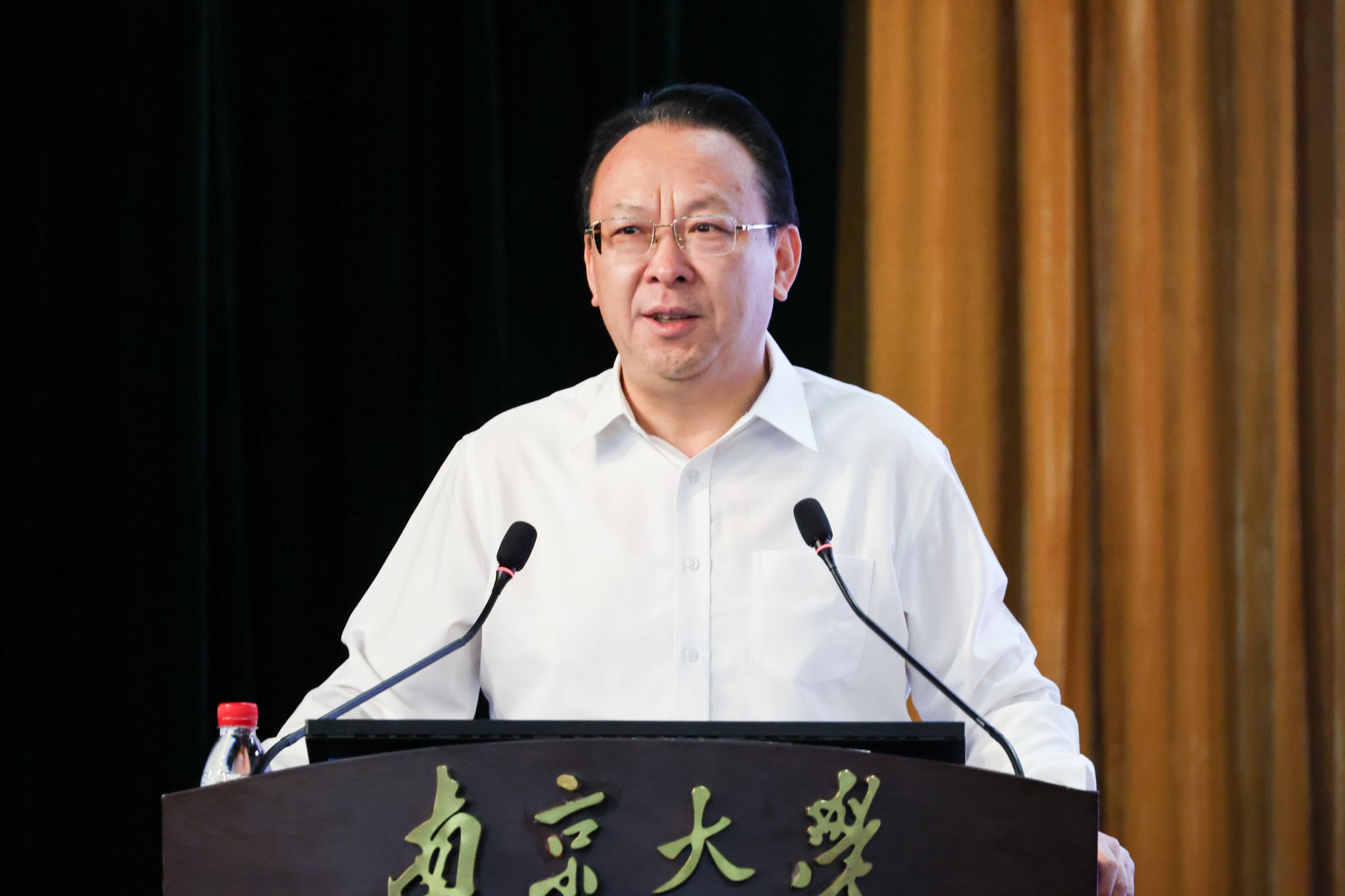
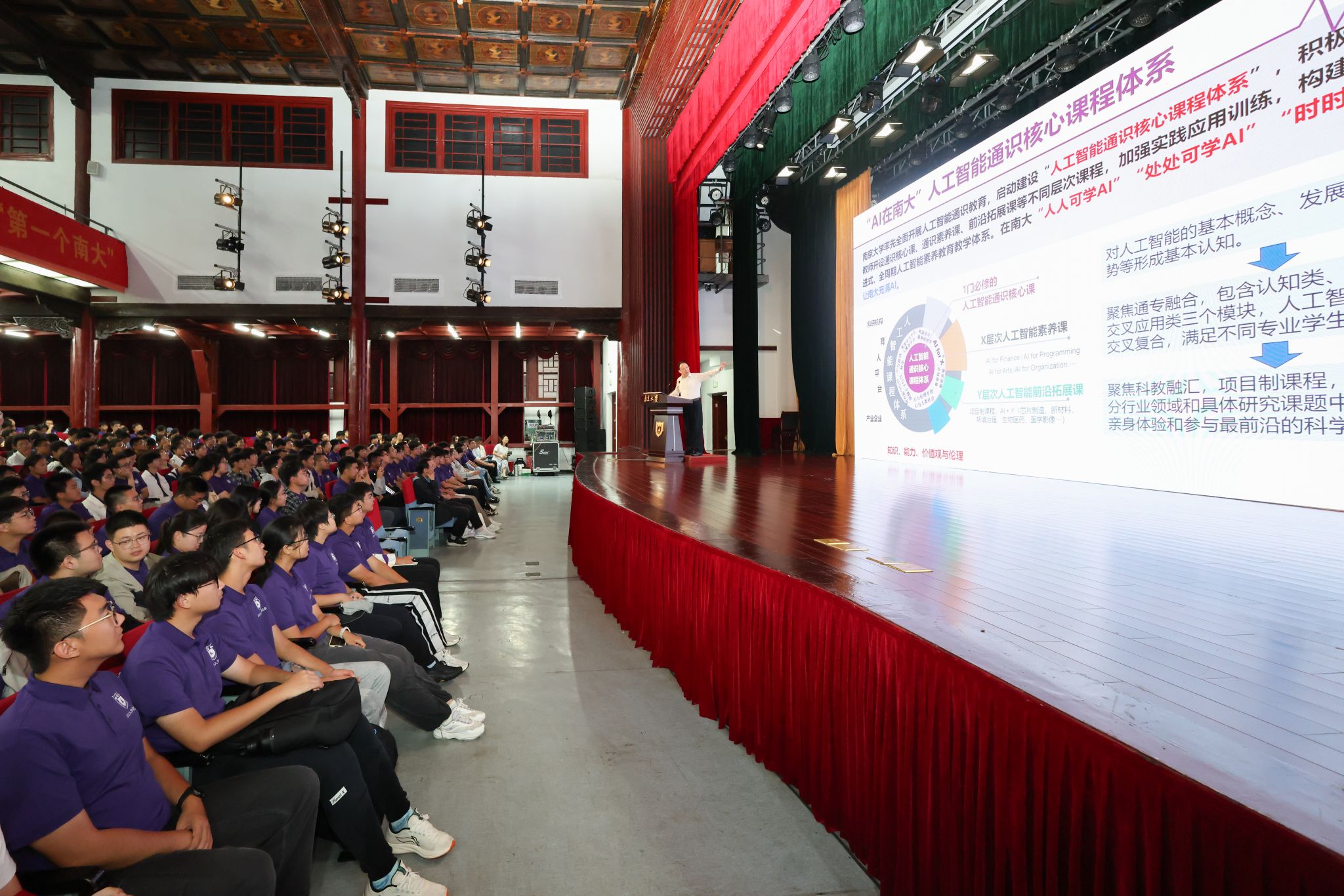
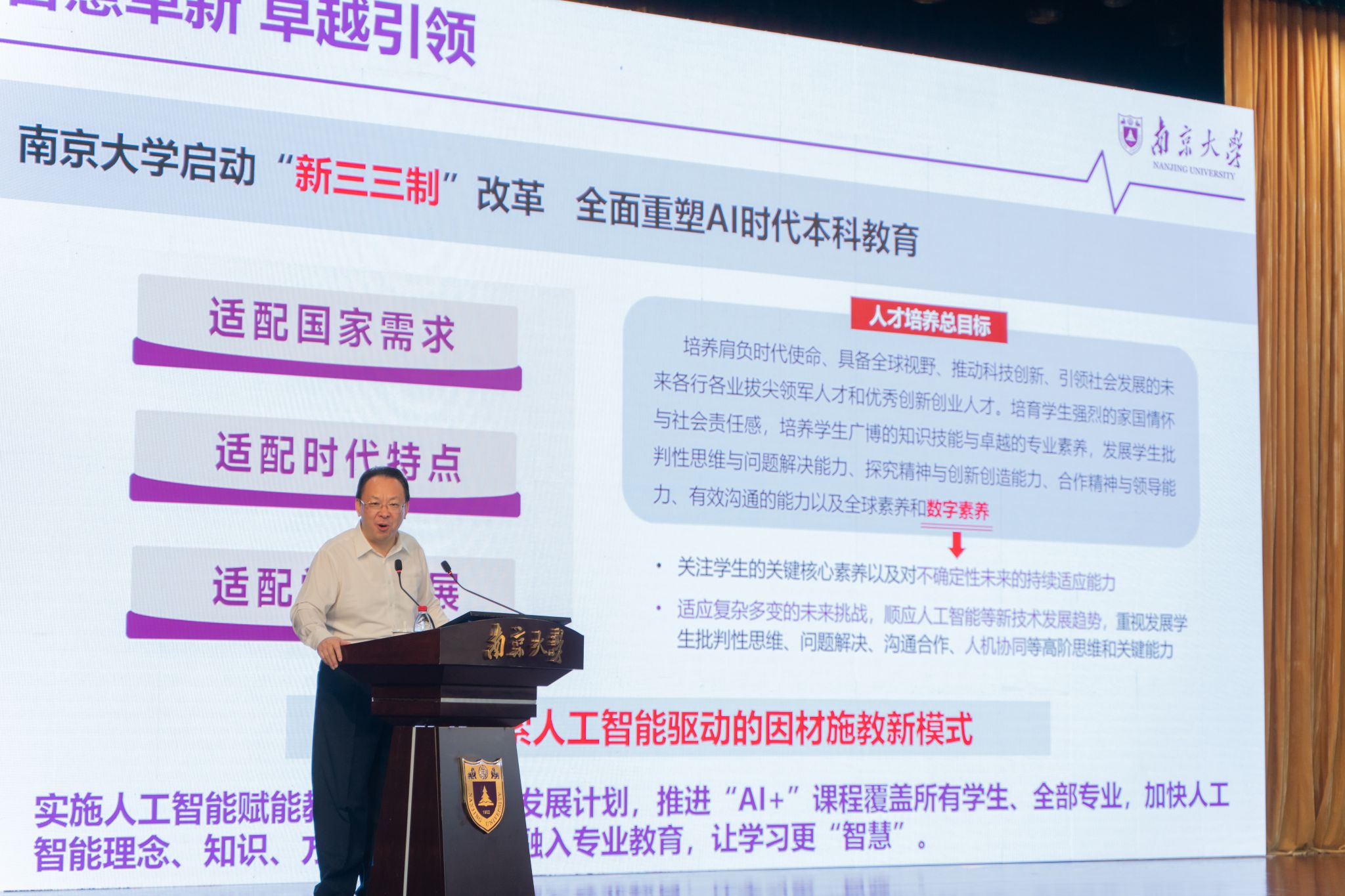
He stated that NJU is deeply exploring new models of individualized teaching driven by artificial intelligence, comprehensively reshaping undergraduate education in the AI era, implementing the "New Triple-Three System" reform that adapts to national needs, characteristics of the times, and student development; meanwhile, starting this year, the university is comprehensively implementing the "Graduate Student AI+ Innovation Capability Development Action Plan," incorporating AI general education courses into required courses for graduate freshmen, constructing a progressive course training model from "general foundation" to "capability enhancement" to "entrepreneurial practice." "Through AI empowerment, we will further polish NJU's brand of providing the best undergraduate education and cultivating the most innovative graduate students."
After introducing the course origins, Tan Tieniu began with three aspects - basic concepts, current development status, and development trends of artificial intelligence - gradually unfolding a brilliant and vivid AI general education class. From the first proposal of the artificial intelligence concept in 1956, the famous Turing Test, to artificial intelligence around you and me in the 21st century; from explanations of concepts such as strong artificial intelligence, weak artificial intelligence, super artificial intelligence, generative artificial intelligence, and embodied intelligence, to the ups and downs of AI development history with three rises and two falls, up to today's vigorous development and emerging trends and the six important insights they bring... The insightful viewpoints with detailed evidence quickly sketched a clear and vivid conceptual map of AI.
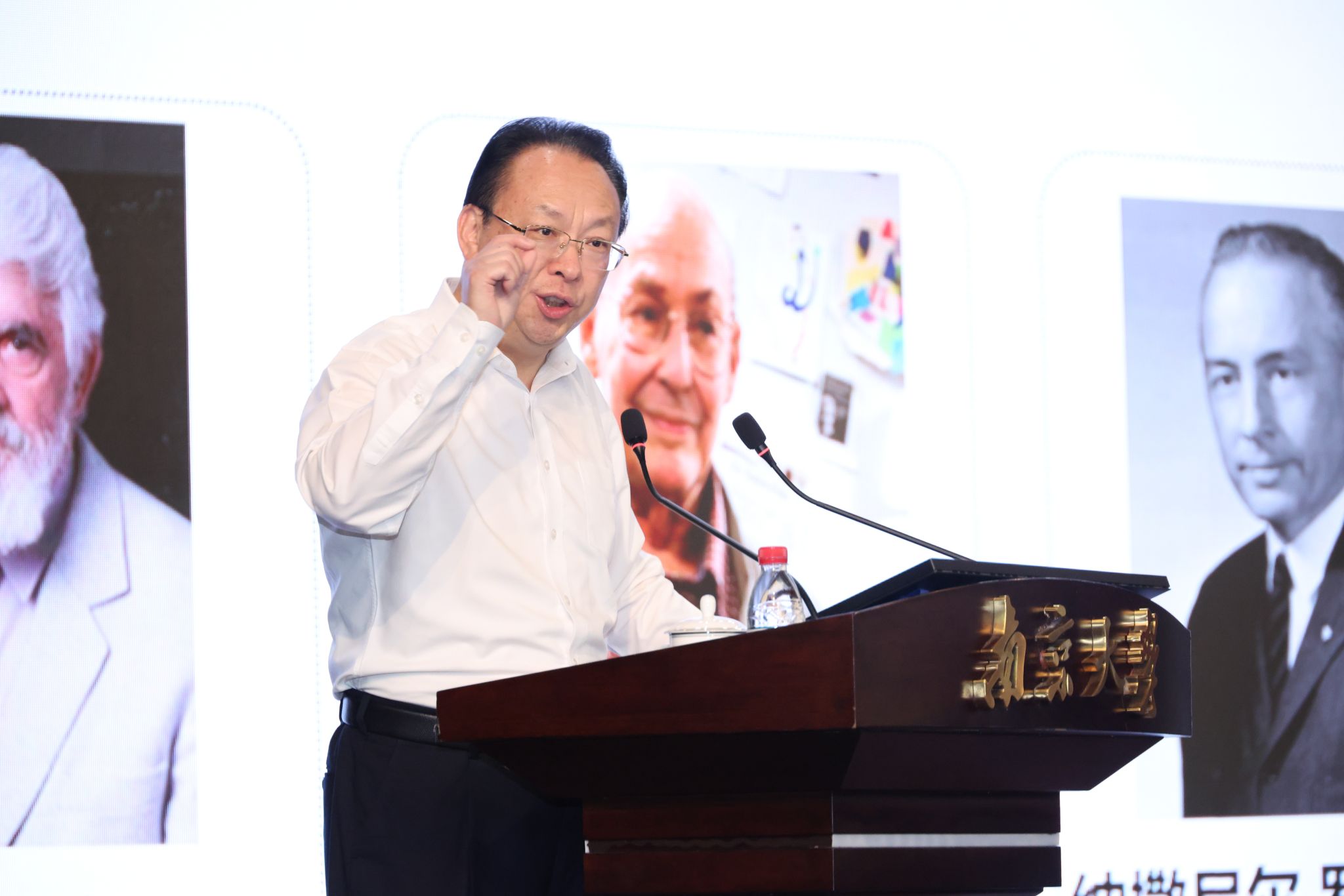
"After nearly 70 years of development, artificial intelligence has achieved important breakthroughs in theory, technology, and applications, and has become the core driving force promoting a new round of technological and industrial revolution, profoundly affecting the world's economic, political, and military landscape and human social development." From facial recognition to iris and gait recognition, artificial intelligence helps humans more accurately identify individuals; AI for Science is called the fifth paradigm, bringing profound transformations to numerous fields including life sciences, physical sciences, materials science, humanities and history, and artistic innovation; from empowering technology to applications in agriculture, mining, logistics, law, finance, and other industries, artificial intelligence is accelerating deep integration with the real economy. Tan Tieniu believes that the current state of AI development can be summarized in eight phrases: specialized artificial intelligence is becoming increasingly mature, large model technology has achieved important breakthroughs, generative artificial intelligence is bursting with vitality, embodied intelligence and humanoid robots are receiving much attention, AI-driven scientific research is developing rapidly, artificial intelligence is accelerating empowerment of all industries, the social impact of artificial intelligence is becoming increasingly prominent, and general artificial intelligence has a long way to go.
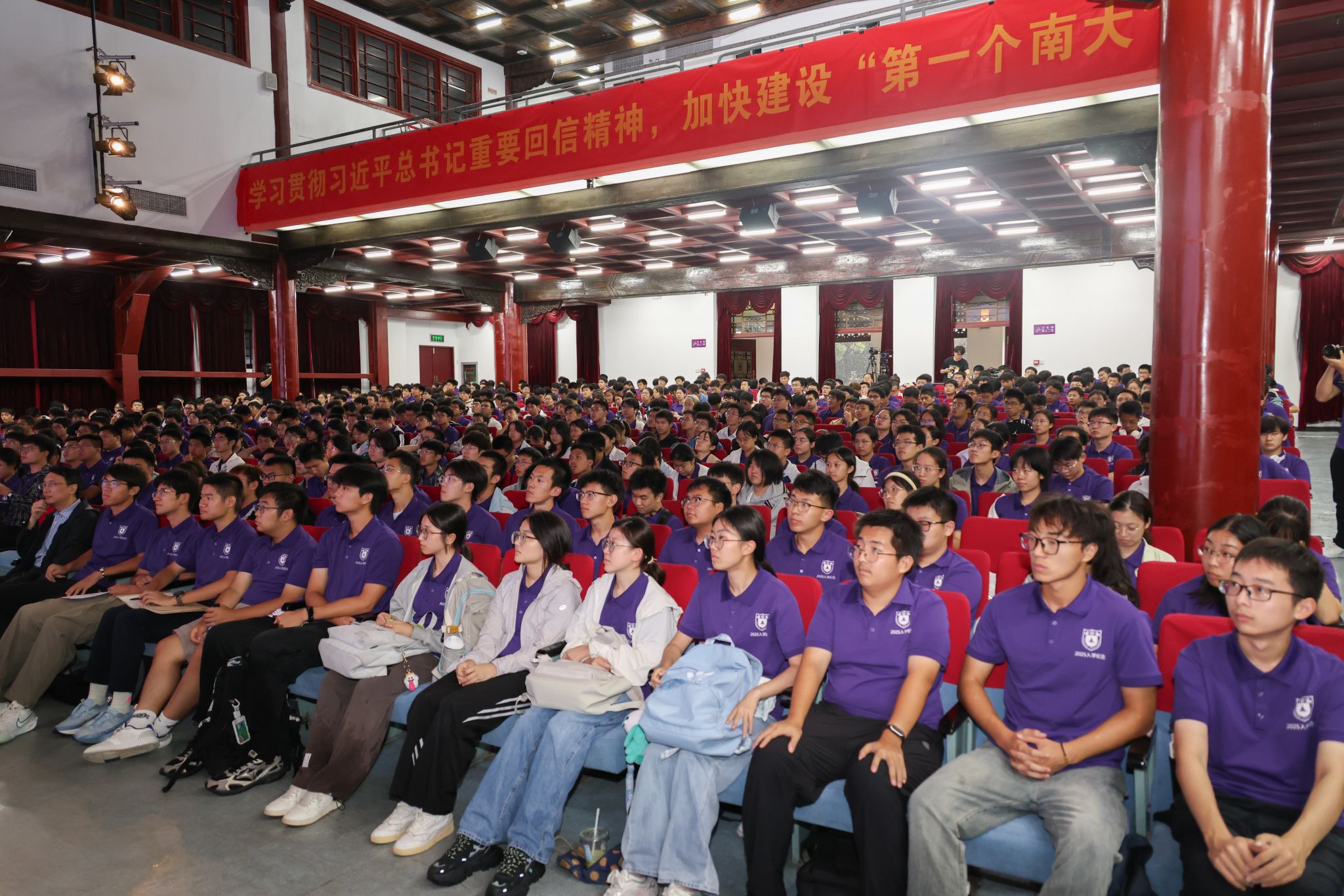
Tan Tieniu emphasized that general artificial intelligence is still in its early stages. For example, ChatGPT will seriously explain "how to find aliens," Sora's text-to-video generation is full of loopholes, and translation software gives ridiculous answers because it can't understand banner slogans, creating a bunch of "comedy effects"... "It has intelligence but no wisdom, has IQ but no EQ, has specialized talent but no general talent. If summarized in 8 Cnese hicharacters, it would be 'much knowledge, little wisdom, no strategy, lacking emotion.'" Tan Tieniu's witty and humorous explanations and vivid cases randomly demonstrated on site continuously won knowing laughter and enthusiastic discussions from freshmen both online and offline. When discussing AI development trends, he also summarized eight phrases: from specialized artificial intelligence to multi-purpose artificial intelligence, from artificial intelligence to human-machine hybrid intelligence, from "artificial + intelligence" to autonomous intelligent systems, from "brute force" artificial intelligence to "skillful" artificial intelligence, from "rigid" artificial intelligence to "warm" artificial intelligence, from "black box" artificial intelligence to trustworthy artificial intelligence, artificial intelligence will further accelerate profound transformation of all industries, and global governance issues of artificial intelligence will become increasingly prominent.
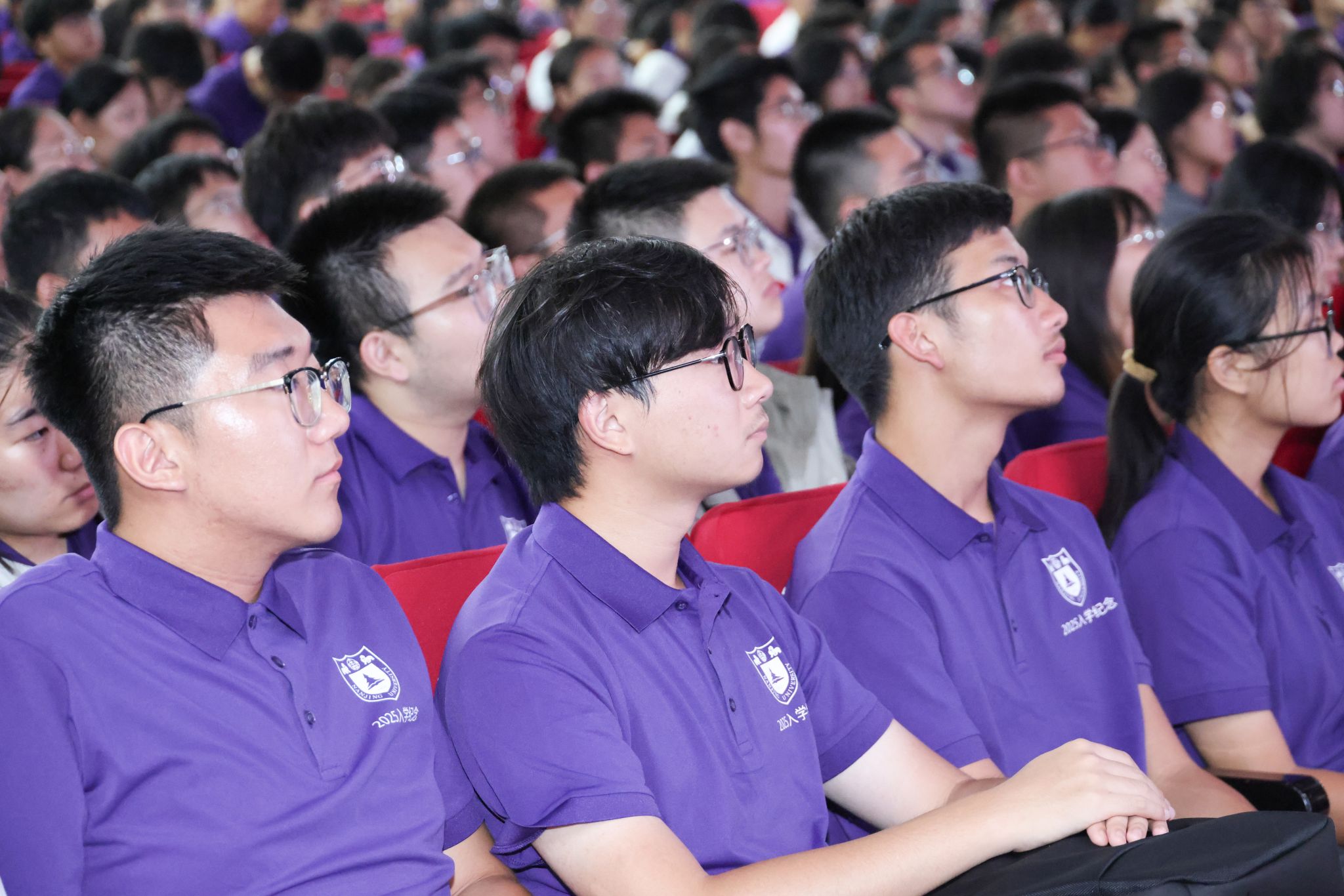
Tan Tieniu specifically pointed out that artificial intelligence = artificial + intelligence; how much human resource is put in determines how much intelligence is gained, and how much "intelligence" wanted requires how much "energy" consumption. Artificial intelligence has huge development space but won't stay this "hot" forever, and the deep social ethical issues it brings such as deepfakes, privacy leaks, and machine discrimination will also become more prominent. Tan Tieniu believes we should uphold a rational and pragmatic spirit and solidly advance basic research, innovation ecosystem construction, talent cultivation, laws and regulations, and other work. "Artificial intelligence is not omnipotent and still has many limitations, but in today's world where artificial intelligence is widely penetrating and the era of intelligence is upon us, not learning about, not understanding, and not embracing artificial intelligence is absolutely impossible."
Finally, Tan Tieniu introduced the teaching arrangements for this semester's AI general education core course. The course brings together multiple renowned scholars and experts from the university's artificial intelligence field as well as interdisciplinary research fields, covering theoretical learning of hot topics such as machine learning, neural networks, machine vision, human-machine gaming, intelligent speech, and large models, drawing a relatively complete knowledge map of AI disciplines for students. At the same time, it will gather resources both inside and outside the school, partner with leading enterprises, create various real application scenarios, and organize basic and advanced practical activities, providing platforms and resources for students to use AI tools and technologies to assist learning and living and for further innovation and creation, achieving "everyone learns AI, everyone knows AI" through "learning by doing" and "creating while learning."
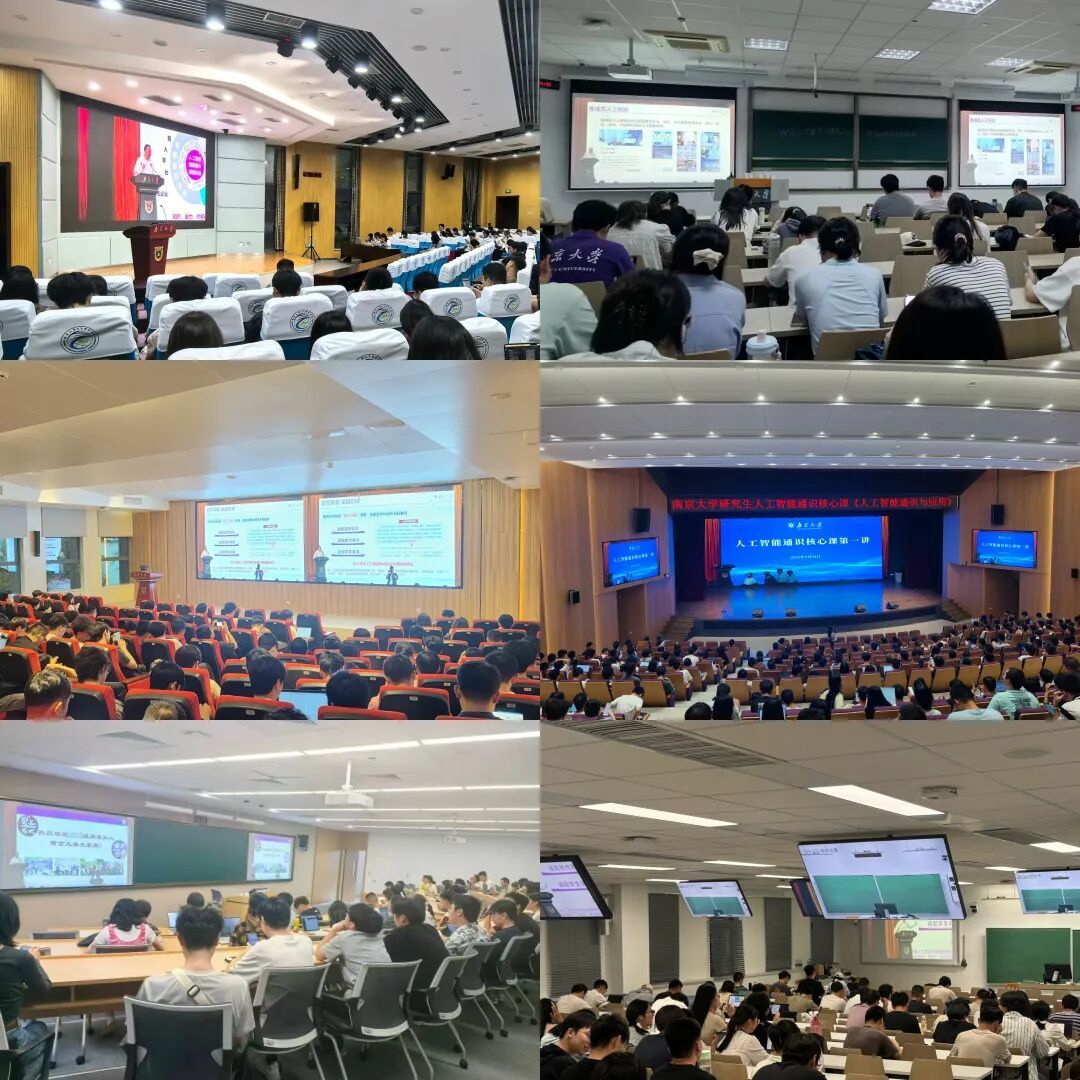
New graduate students watch the online live broadcast of the first lecture
The "first lecture" came to a perfect conclusion with an exciting preview of the specific teaching arrangements for the 2025 AI general education core course, and also officially opened the enlightenment journey for NJU freshmen in the field of artificial intelligence.