Nanjing University research team led by Prof. Huang Xianjin from the School of Geography and Ocean Science has made new progress in research on sustainable food system transition. The findings were published in Science Bulletin under the title Coordinated pathways to a low-carbon, healthy, and equitable food system in China.
The global food system accounts for roughly one-third of anthropogenic greenhouse gas emissions. As a major developing country, China’s transition toward a more sustainable food system faces multifaceted, systemic challenges: how to achieve carbon reduction targets while ensuring adequate nutrition for its 1.4 billion people, and at the same time reducing environmental and social inequalities?
Focusing on the challenge of coordinating emissions reduction, nutrition and equity in China’s low-carbon food system transition, the study developed an innovative Food System Life-cycle Integrated Assessment Model (FSLIAM) for China. The model integrates carbon-footprint data for 12 major food categories across 31 provincial-level regions from production to consumption, and systematically evaluates the effects of combined strategies including dietary transition, technological upgrading, land optimization and import adjustment. The study found that integrated measures could reduce greenhouse gas emissions by 41.7%, while improving dietary health and food affordability and reducing both social and environmental inequality.
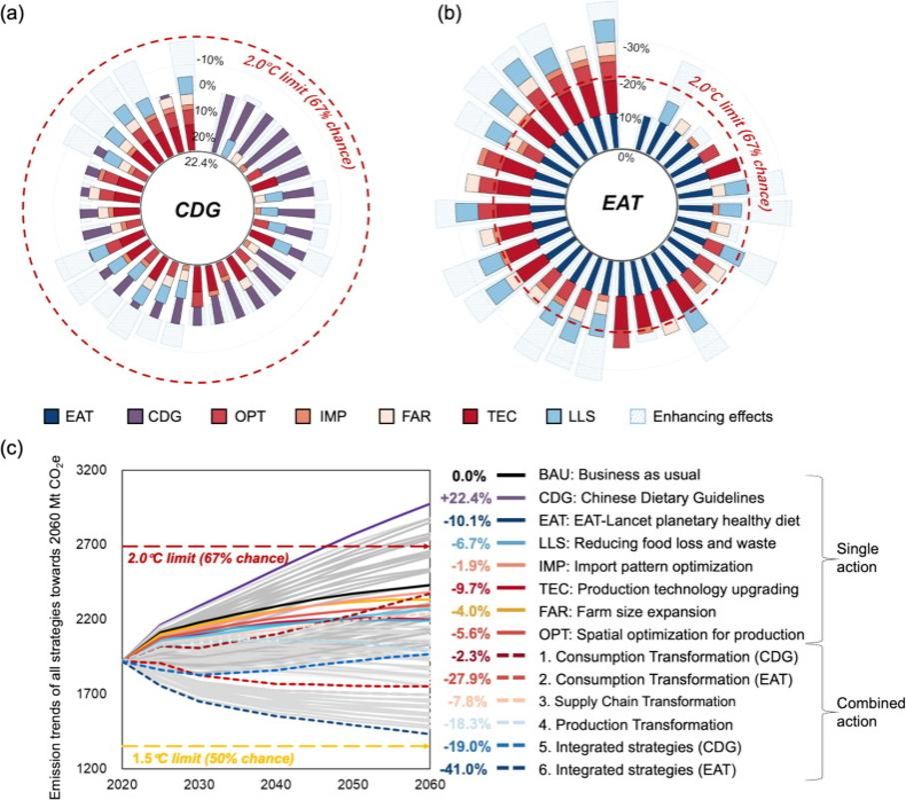
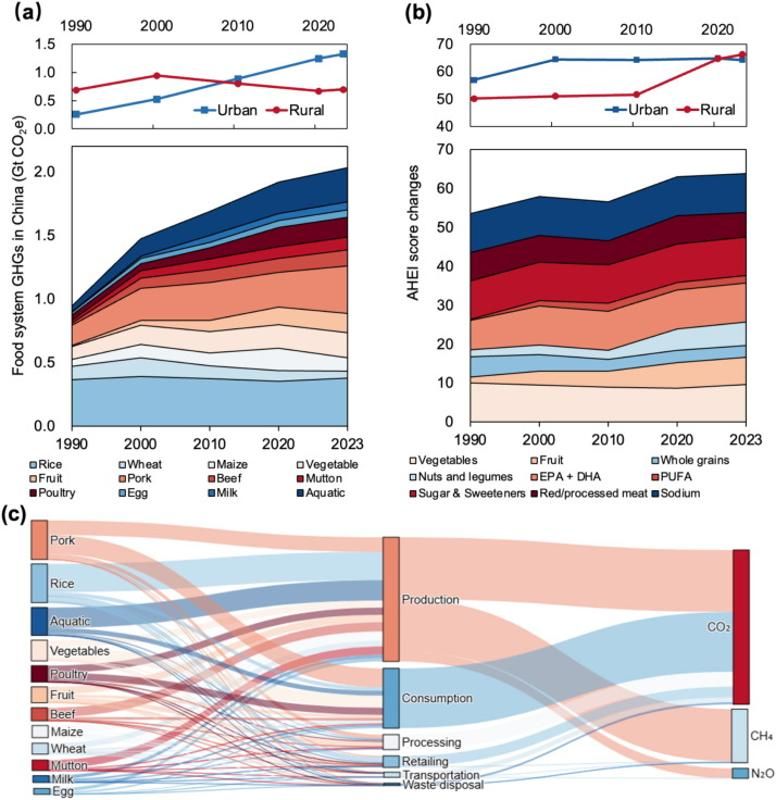
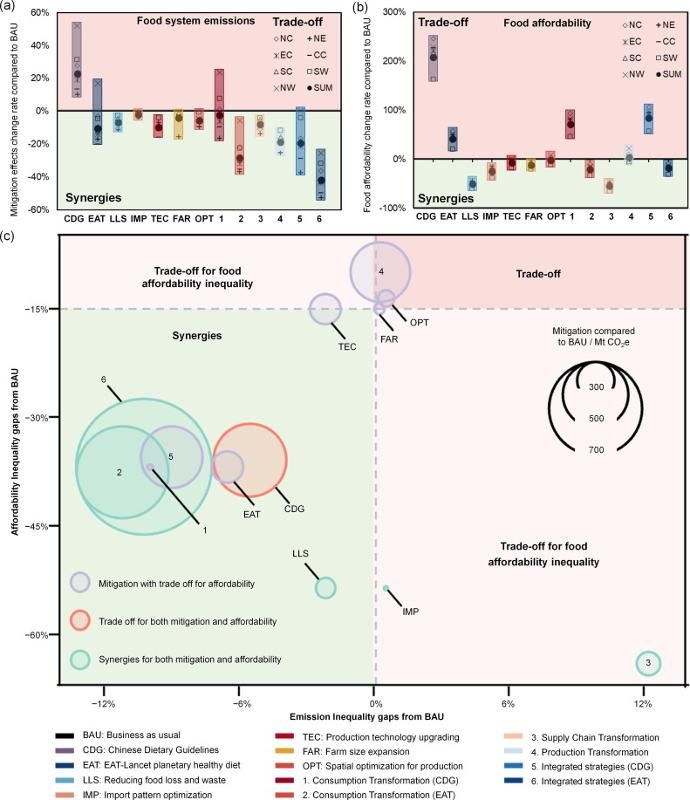
This study proposes that integrated actions—spanning the entire food supply chain, crossing sectoral boundaries, and accounting for regional disparities—can deliver synergies in emissions reduction, public health, and equity. It offers forward-looking governance insights for developing countries undergoing rapid urbanization and dietary transition: on the one hand, it is essential to break down sectoral barriers and reshape a cross-sector, cross-domain governance framework for a “big food” approach; on the other hand, it is necessary to establish regional spatial compensation mechanisms to promote a just transition. Currently, the global food system accounts for one-third of anthropogenic greenhouse gas emissions. Without action, emissions from the food system alone could exceed the 1.5°C carbon budget, making its sustainable transformation an urgent imperative.
The research was conducted jointly by Nanjing University, the University of Hong Kong, the University of Maryland and the University of Reading, among other institutions.
Article Link: https://doi.org/10.1016/j.scib.2026.02.018
Writer: Wang Shuyi