In response to the growing threat posed by increasingly frequent rapid temperature fluctuations worldwide that endanger public health, ecological security, and economic growth, Fu Congbin's team at NJU has revealed the spatiotemporal patterns, driving mechanisms, and health impacts of abrupt weather shifts characterized by sudden swings between extreme cold and heat under global warming.
The research team conducted more than a decade of investigation into abrupt temperature shifts—often experienced as sudden transitions between unusually cold and hot weather. To better capture this phenomenon, the team introduced a new metric defining extreme day-to-day temperature change as a difference between consecutive days exceeding the historical 90th percentile. Using multi-source observations, reanalysis data, and CMIP6 climate model simulations, the study shows that such events have intensified significantly in low- and mid-latitude regions (Figure 1), with recurrence intervals shortening. Attribution analysis identifies greenhouse gas forcing as the primary driver (Figure 2). Projections indicate that under high-emission scenarios, the frequency and overall intensity of these rapid temperature swings could rise substantially by 2100, potentially affecting more than 80% of the global population.
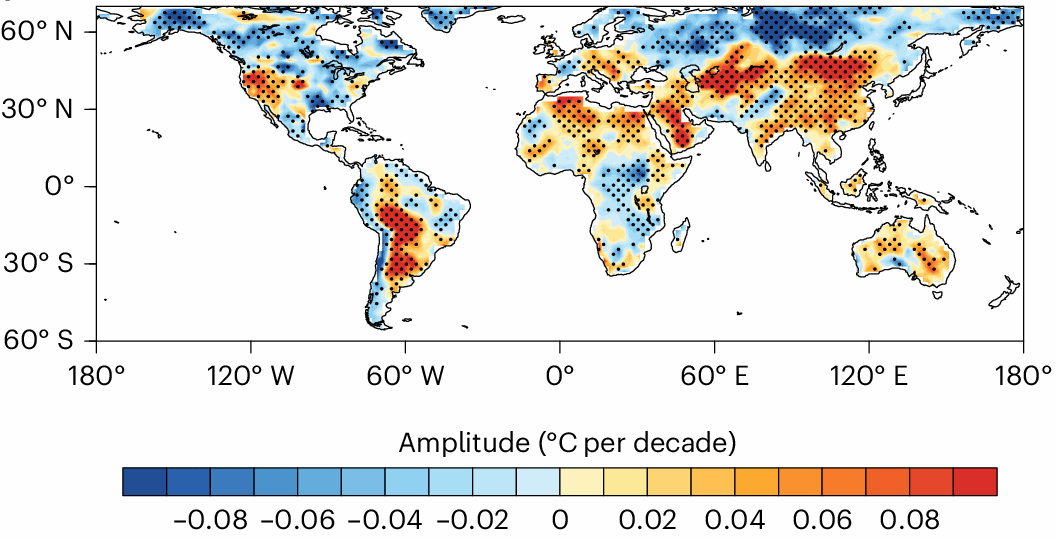
Figure 1
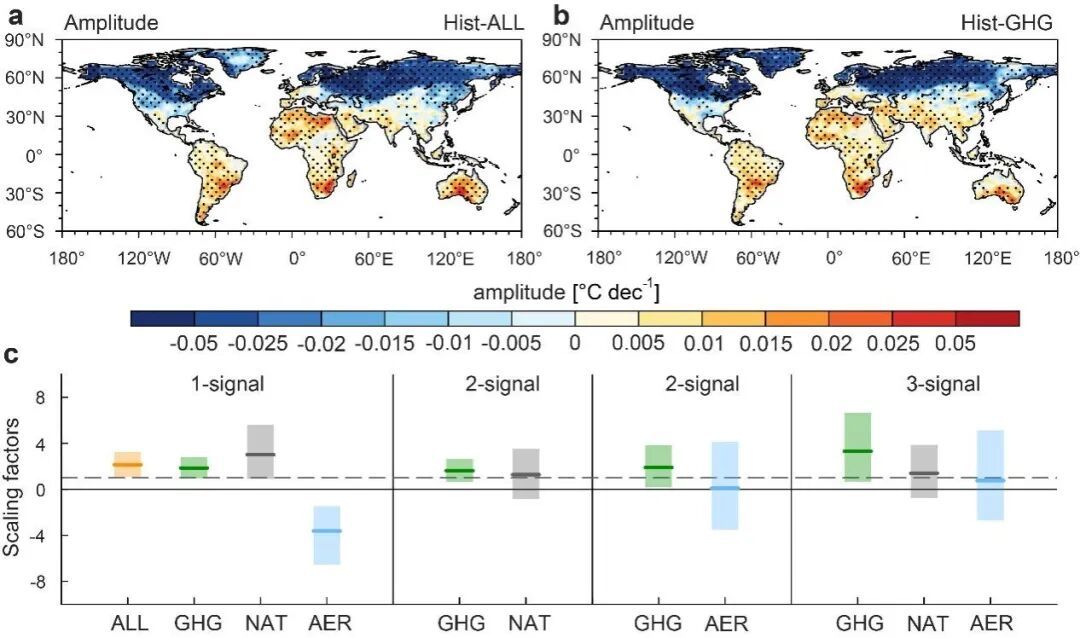
Figure 2
The study further elucidates the underlying mechanisms, showing that global warming intensifies soil drought, increases variability in sea-level pressure and soil moisture through land–atmosphere interactions, thereby reducing surface heat capacity and amplifying day-to-day fluctuations in cloud cover and radiation, ultimately leading to rapid temperature swings (Figure 3).
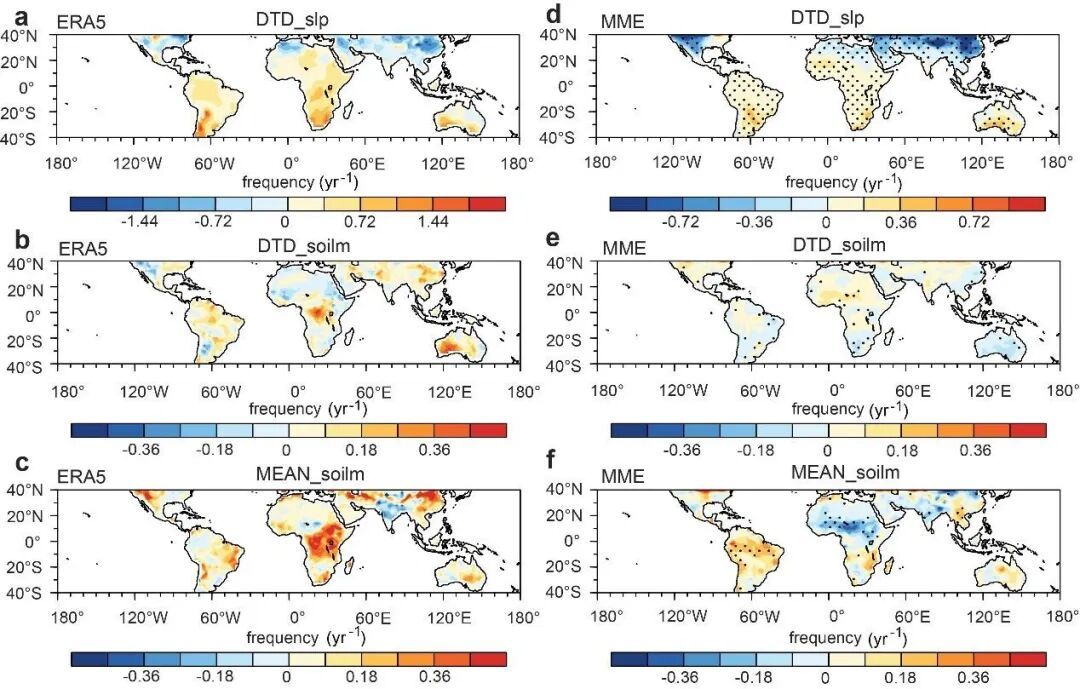
Figure 3
Beyond climate dynamics, the study highlights serious health implications. Analysis of mortality data from China and the United States reveals that extreme day-to-day temperature changes are more strongly associated with all-cause mortality than conventional diurnal temperature differences, with elevated risks for cardiovascular and respiratory diseases.
The findings systematically distinguishes extreme day-to-day temperature changes from traditional extreme climate indices, establishing its scientific validity as an independent metric. Ongoing global warming is posing significant challenges to public health, ecosystem resilience, and adaptive capacity. The findings underscore the urgent need for greater attention to and research on this emerging form of climate risk, and relevant international scientific organizations should recognize it as a new category of extreme weather event.
Source: https://doi.org/10.1038/s41558-025-02486-9